
Last updated November 25, 2026
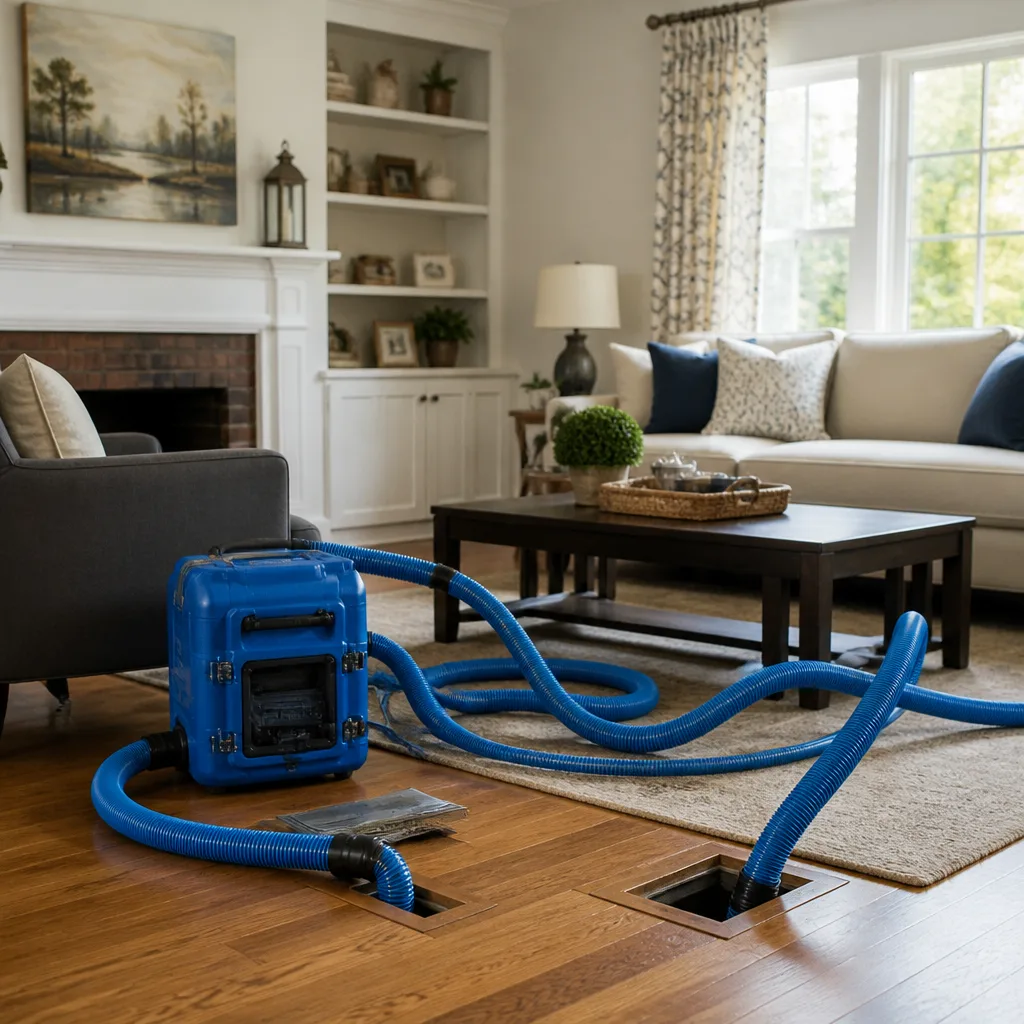 Whole-home duct cleaning
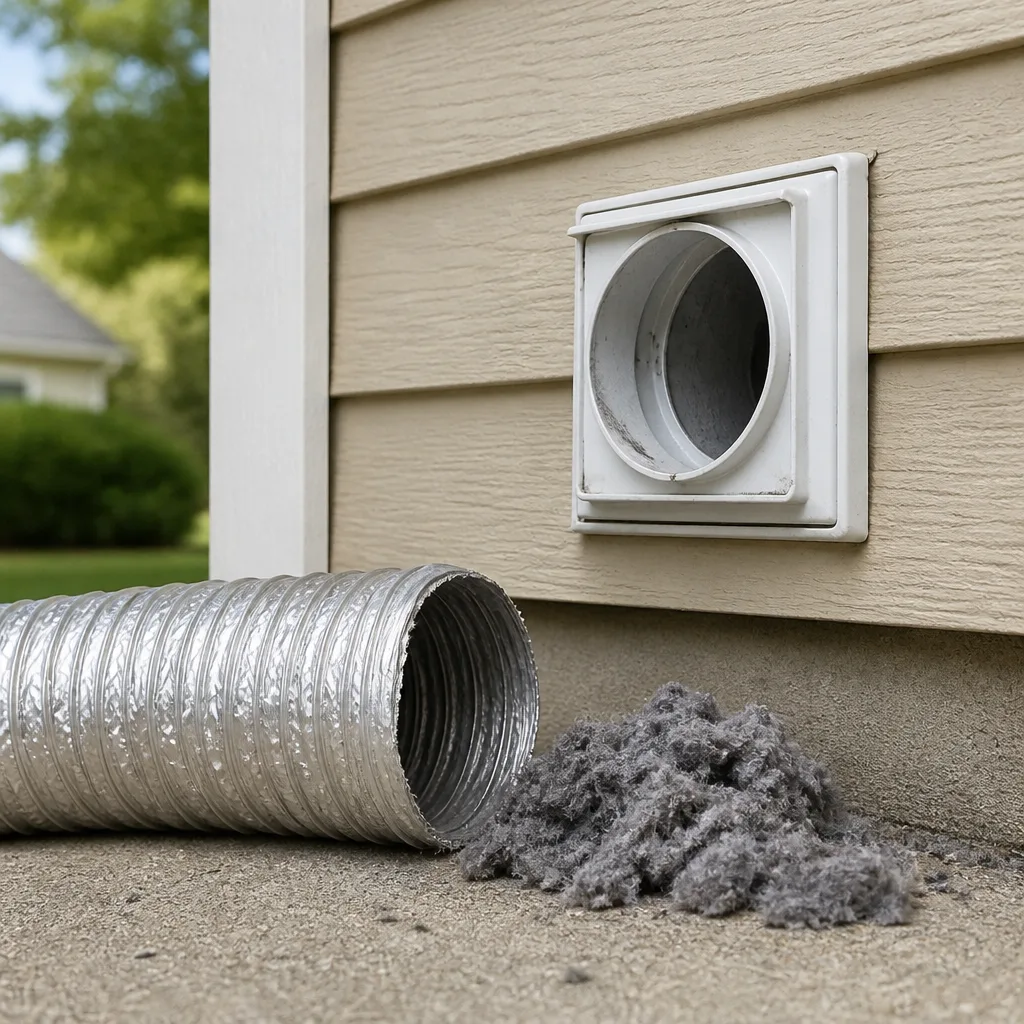 Dryer vent cleaning
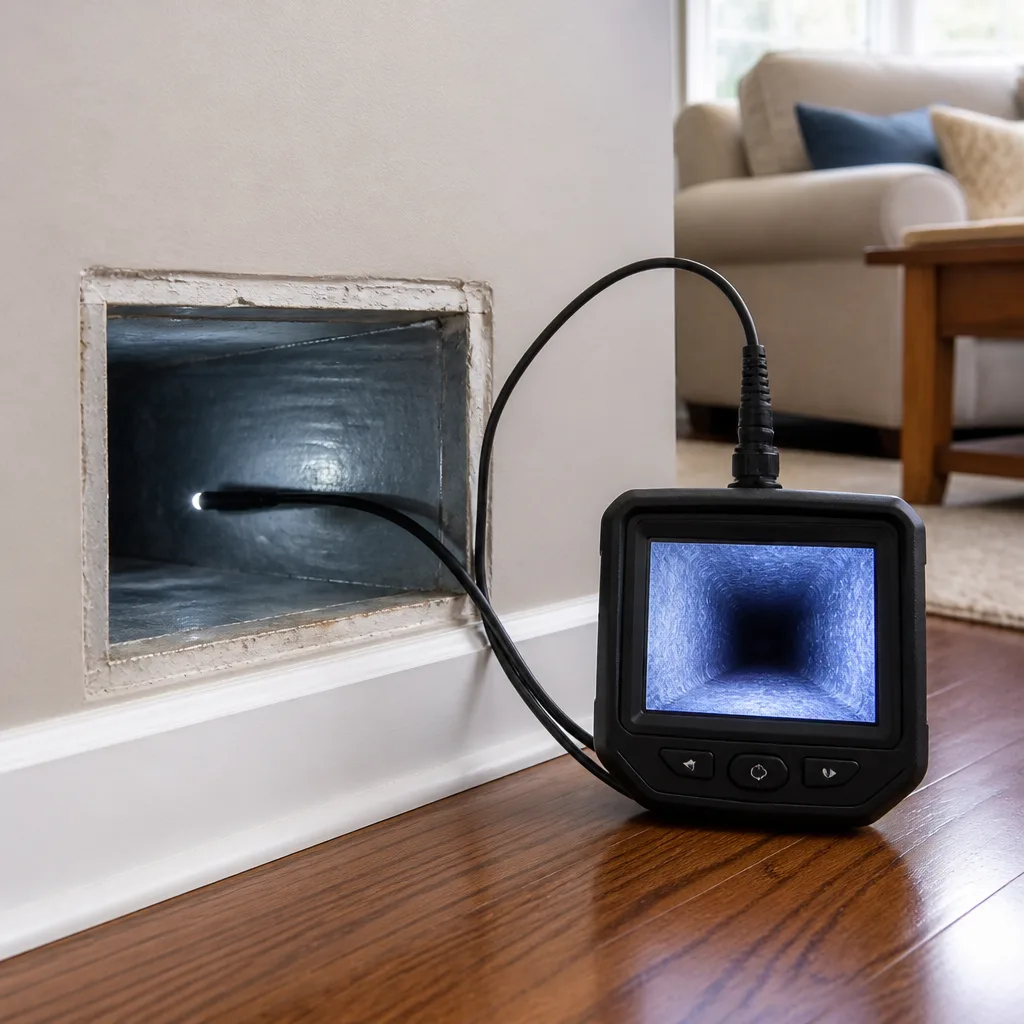 Camera inspection
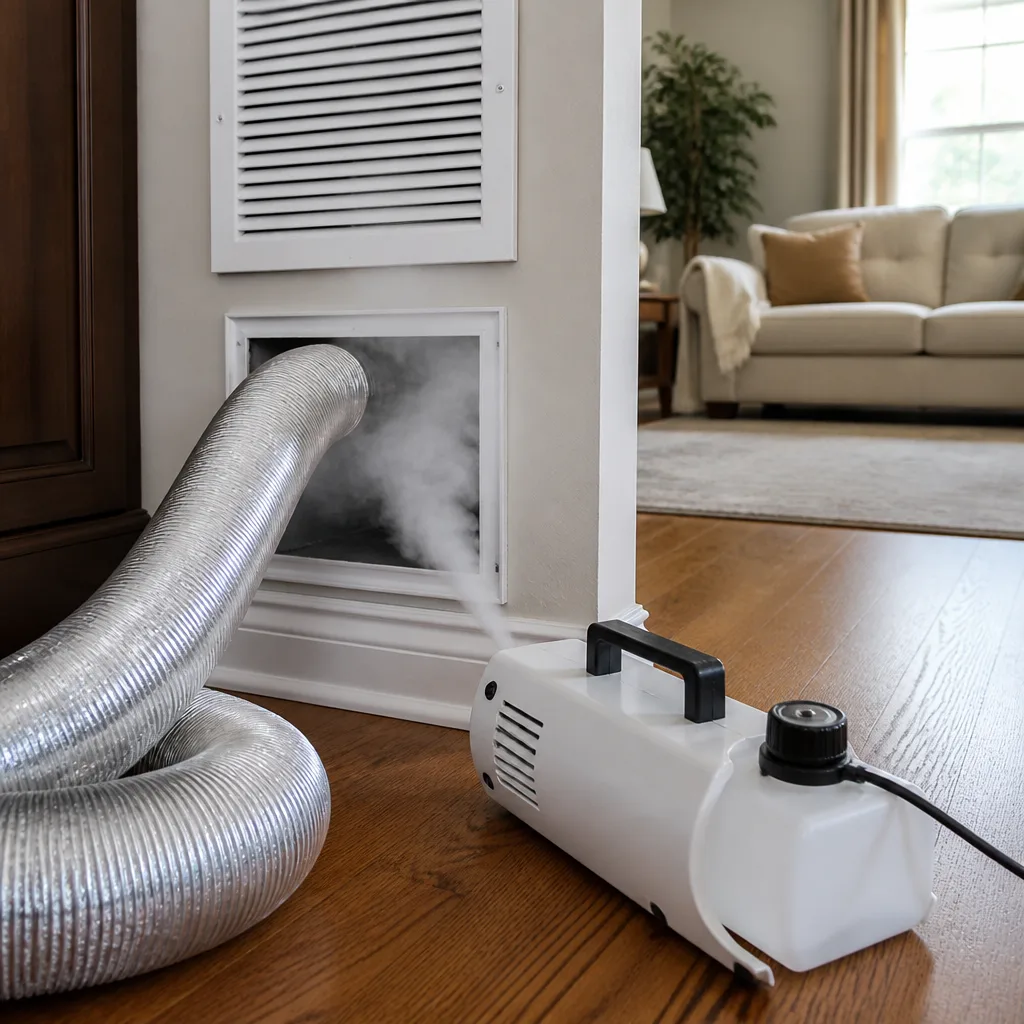 Sanitizing & deodorizing
Whole-system duct and dryer vent check with before-and-after photos - you see exactly what came out of your vents
That "$99 whole-house special" is a bait ad - the real number appears once they are in your hallway, or the "clean" is a shop-vac at the register. We photograph the inside of your ducts before and after instead.
Air Duct Cleaning Maintenance Checklist for Clear Lake Homeowners
After a tropical storm rolls through the Houston-Galveston corridor, most homeowners walk the yard for shingles and check the gutters. Almost nobody thinks to check whether the pressure swings from that storm pushed outside air, insulation crumbs, or debris into their duct system. That’s the gap this guide fills. Duct maintenance in Clear Lake isn’t a once-a-year cleaning and forget it. It’s a running record of what your system has been through, tied to the seasons that actually hit this part of Texas: hurricane season, oak and ragweed pollen, and the humidity swings that never quite leave us. Below you’ll find a month-by-month checklist, the self-checks you can do at the register without pulling any ductwork, and a simple way to log it all so a technician can spot trends instead of guessing at one snapshot.
Quick Answer
A Clear Lake homeowner’s duct maintenance routine should include checking filters every 30 to 45 days during peak cooling months, a visual and smell check at each register monthly, and a professional inspection once a year or after any major storm. Actual cleaning is warranted only when you find real evidence, such as visible debris, a musty odor that returns after sanitizing, or higher energy bills with no other explanation. Documenting these checks over time matters more than any single cleaning date.
Styles & brands we work with
- Whole-home duct cleaning
- Dryer vent cleaning
- Camera inspection
- Sanitizing & deodorizing
Table of Contents
- Why Clear Lake Ductwork Ages Differently
- The Month-by-Month Maintenance Checklist
- Filter-Check Intervals for High-Runtime AC Systems
- Self-Checks You Can Do at the Register
- Professional Inspection vs. Duct Cleaning: How They Differ
- How to Log Duct Condition So Trends Show Up
- Why Repair and Sealing Belong on the Checklist
- When to Call a Professional
Why Clear Lake Ductwork Ages Differently
Ductwork in Clear Lake doesn’t age on the same calendar as ductwork in a dry, mild climate. Two local forces do most of the wear. The first is runtime. With the summer heat and humidity we get here, air conditioners run deep into the year, and every hour the blower moves air is an hour of wear on the filters, the connections, and the interior surfaces. The second is storm season. A tropical system in the Gulf doesn’t usually rip the roof off a Clear Lake home, but it does change pressure inside and outside the house for a stretch of hours. That pressure shift can pull attic air, insulation fibers, and moisture-laden outside air into gaps and returns that were tight the week before.
Then there’s pollen. The Clear Lake area sits close to water, marsh, and plenty of mature trees, so spring and fall bring heavy pollen loads that migrate indoors every time the system cycles. A filter that seemed fine in February can be loaded by early April.
The three local seasons that matter
- Hurricane season (roughly June through November): prepare the system before a named storm, inspect it after. Pressure changes and water intrusion both affect ducts.
- Peak pollen (spring and fall): the highest-load window for filters and return grilles.
- Humidity swings (winter and shoulder months): the AC runs less, airflow slows, and any moisture already inside the system has more time to sit.
None of these are reasons to panic-clean your ducts. They’re reasons to pay attention on a schedule rather than react to a bad smell once a year. If you want the full grounding on what a professional job actually involves before building a checklist around it, our air duct cleaning page covers the process step by step.
The Month-by-Month Maintenance Checklist
Here’s a checklist organized by what’s happening outdoors in Clear Lake, not by an arbitrary HVAC calendar. Follow it in order and you’ll catch most problems before they turn into a costly repair. Each item is something you can do yourself; the professional touchpoints are called out where they belong.
- January: check every register for dust streaks and listen for whistling at the grilles. Low-runtime months make quiet leaks easier to hear. Swap the filter if it looks gray.
- February: walk the attic or garage where ducts are visible. Look for sagging flex duct, disconnected collars, or tape peeling off seams. Note anything loose.
- March: as pollen ramps up, move to a 30-day filter check. Wipe the return grille face; a heavy film here means the filter is loading early.
- April: take your first sealed-bag register swab sample of the year (see the logging section below). Note the color and what you felt at the vent.
- May: pre-hurricane-season inspection. Confirm indoor and outdoor units are clean, and note the condition of any duct connections near the attic hatch.
- June through August: keep the 30-to-45-day filter check going through peak runtime. Do a monthly smell test at each register on a still morning, not right after cooking.
- September: post-storm inspection if a system passed through. Look for water stains near registers, new loose tape, or any change in airflow at the farthest rooms.
- October and November: second pollen window. Repeat the filter checks more often and recheck the register swab against your spring sample.
- December: year-end review of your log. Compare the whole year against last year and decide whether an inspection is due.
This is where a scheduled professional inspection fits naturally. The local pro we connect you with uses Rotobrush and Nikro systems, which is the same class of equipment HVAC contractors use, not a shop vacuum. That matters for one simple reason: a camera inspection can see what a home checklist cannot.
Filter-Check Intervals for High-Runtime AC Systems
The standard advice to check your filter every three months is calibrated for a mild climate where the system runs a few months a year. In Clear Lake, the air conditioner runs deep into the year, which means the filter sees more air and more debris in the same calendar window. That’s why we tell homeowners here to check more often and replace based on condition, not the date on the packaging.
A practical filter schedule for Clear Lake homes
- Peak cooling and peak pollen (May through October): check every 30 to 45 days. Replace when you can no longer see light through the filter held up to a lamp.
- Shoulder months (March, April, November): check every 45 to 60 days.
- Low-runtime months (December through February): check monthly anyway. Winter humidity swings can load a filter with dust that’s had time to settle.
Two things raise your filter load beyond the calendar. One is a recent renovation, since drywall dust and sawdust get pulled straight into the return. The other is pets; a home with a shedding dog or cat can foul a filter in half the normal time. If either applies, check weekly until the load stabilizes. When the filter clogs faster than it should no matter what you do, the cause is usually upstream of the filter, in the return duct or the blower, which is a job for professional equipment rather than a better filter.
For homes with whole-home air treatment, a Honeywell or Aprilaire system adds a filter or media cabinet stage that needs its own check interval. The pro we connect you with is authorized to service and work alongside these systems, so the whole filtration chain gets assessed together rather than one filter at a time.
Self-Checks You Can Do at the Register
You can learn a lot about your ductwork without pulling a single panel. The register is the one place where the inside of the system meets the inside of your home, so it’s the natural inspection point. Do these checks once a month, at the same time each month if you can, so your observations line up for comparison.
What to look for
- Streaks and shadows: dark dust trails running from the register to the wall suggest air is leaking around the grille and pulling in debris.
- Visible dust puffs: turn the system on and watch the register for a second or two. A puff on startup means loose material is sitting in the branch duct.
- Odd colors: gray-black dust is ordinary. Rust-colored or greenish staining near the register points to moisture, which is worth a professional look.
- Cold spots and weak flow: feel the airflow with the back of your hand. Any register noticeably weaker than its neighbors suggests a blockage, a crushed duct, or a disconnected run.
What to smell for
The nose catches a lot that the eye misses. A musty, damp smell at a register means moisture is hanging around somewhere in the system. An oily or chemical smell can come from renovation or a product, but if it persists over several days, log it. And the most telling one: if a smell only appears when the system kicks on, the air is picking it up somewhere between the return and the register.
What to listen for
Whistling at a grille is a pressure problem, usually a filter that’s too restrictive for the system or a duct run that’s undersized. Rattling in the walls when the blower turns on suggests a loose connection. Both are inspection triggers, not cleaning triggers, and that distinction matters for the next section.
Professional Inspection vs. Duct Cleaning: How They Differ
This is the single most misunderstood part of duct maintenance, and it’s where a lot of homeowners get pushed into a cleaning they didn’t need. An inspection is diagnostic. It looks at the inside of the system, checks connections, confirms airflow, and reviews your log against the current state. A cleaning is a corrective action taken when the inspection or your own checks find real evidence that cleaning is warranted. They’re different steps in the same process, and one does not automatically follow the other.
Reasons to book an inspection
- A full year has passed since the last inspection.
- A tropical system passed through and you noticed any change at the registers afterward.
- You’re buying or moving into an older Clear Lake home and don’t know the system’s history.
- You’ve had renovation work done and want to confirm the return didn’t load up.
Reasons a cleaning is actually warranted
- Visible debris inside a branch duct, confirmed with a camera, not just a dusty grille face.
- A musty odor that returns after a sanitizing treatment, which points to a persistent moisture source.
- An energy bill that jumps with no other explanation and a filter that loads faster than usual.
- Rodent or insect activity inside the ductwork.
Notice what isn’t on the second list: the number of years since the last cleaning. Age alone is not a reason to clean. When a cleaning is the right call, the pro we connect you with uses Rotobrush and Nikro equipment, follows with Abatement Technologies sanitizing products where appropriate, and photographs the interior before and after so you see what changed rather than taking our word for it. The HVAC cleaning side of the system, meaning the coil and blower, is often the real source of a smell the ducts are just carrying, which is why the inspection looks at both.
How to Log Duct Condition So Trends Show Up
A technician can only work with what’s in front of them on the day of the visit. If you hand them a log that goes back a year, they can tell whether a problem is chronic or new, which changes the recommendation. Logging doesn’t take much time, and it turns your checks into something a professional can actually read.
A simple log system
- Date each check. One line per month is enough.
- Record three things at one register: what you saw, what you smelled, and how strong the airflow felt. Use a simple scale, like 1 to 5, for the airflow.
- Note the filter condition on the same line: clean, gray, or loaded. Add the date it was last replaced.
- Keep a photo folder. Snap the same register on the same phone on about the same day each month. Side-by-side shots show buildup that’s hard to see day to day.
- Flag storm events. Note the date of any major wind or rain event so a technician can compare the condition before and after.
The bagged-swab sample
Once a quarter, wipe the inside face of a register with a clean white cloth or a sealed-sample bag from a hardware store, fold it inward to trap what you picked up, and date it. You’re not running a lab test, just capturing a reference. A gray film that darkens over two quarters tells a story a single snapshot can’t. Bring the samples or the photos to an inspection and you give the technician a trend line instead of a single data point. That’s the difference between “clean it and hope” and a real diagnosis.
Why Repair and Sealing Belong on the Checklist
Most of the duct-cleaning services a homeowner calls out do cleaning and stop there. If a seam has opened or a flex run has sagged and pulled loose, cleaning the duct doesn’t fix the leak; it just clears the pipe and leaves the hole. That’s why duct repair and sealing belong on the maintenance checklist right next to cleaning. The two together handle the whole system, so the air you paid to clean stays in the duct where it belongs.
Checklist items that signal a repair instead of a cleaning
- Peeling or dried-out mastic or foil tape at a joint.
- Sagging flexible ductwork in the attic or garage.
- A register with weak flow while the blower is clearly working.
- Visible gaps where the return plenum meets the air handler.
Sealing isn’t a weekend project. An experienced pro with the right materials can close the gaps properly and, on top of that, re-check the airflow so the system is balanced afterward. This is the “we fix it, not just clean it” side of the checklist, and it’s the piece most homeowners never think to ask about because every other service skips it. When you’re mapping the full system, our dryer vent cleaning service is a natural pairing: both jobs deal with lint and airflow, and both benefit from the same camera and equipment a pro brings to the inspection.
Common Mistakes to Avoid
- Cleaning on a calendar instead of on evidence. A yearly cleaning is not automatically right for every Clear Lake home. Clean when your log and an inspection support it, not because the date came around.
- Treating the filter as the whole system. Filters are the front line, but a filter that loads in weeks often means the return duct or blower is the problem. Check the whole air path, not just the filter slot.
- Ignoring the smell because it’s intermittent. A musty smell that only appears when the system cycles is a signal, not background noise. Log when it shows up and mention it at the next inspection.
- Skipping the post-storm check. A tropical system can add debris and loosen connections. A visual pass at the registers after a big wind and rain event catches most of it, and it takes ten minutes.
- Letting a cleaning crew stop at the ducts. If the seams aren’t sealed and the coil isn’t clean, a duct cleaning only treats part of the problem. Ask for the repair and sealing scope up front.
- Buying low-grade sanitizer to save a few dollars. Fogging products sold at retail are not the same as the Abatement Technologies products used in professional remediation. The smell often returns precisely because the treatment didn’t penetrate.
- Keeping no record. Without photos and a dated log, you can’t tell whether the conditions you see have been building for months or appeared last week. A pro can’t spot a trend without a history.
See the difference
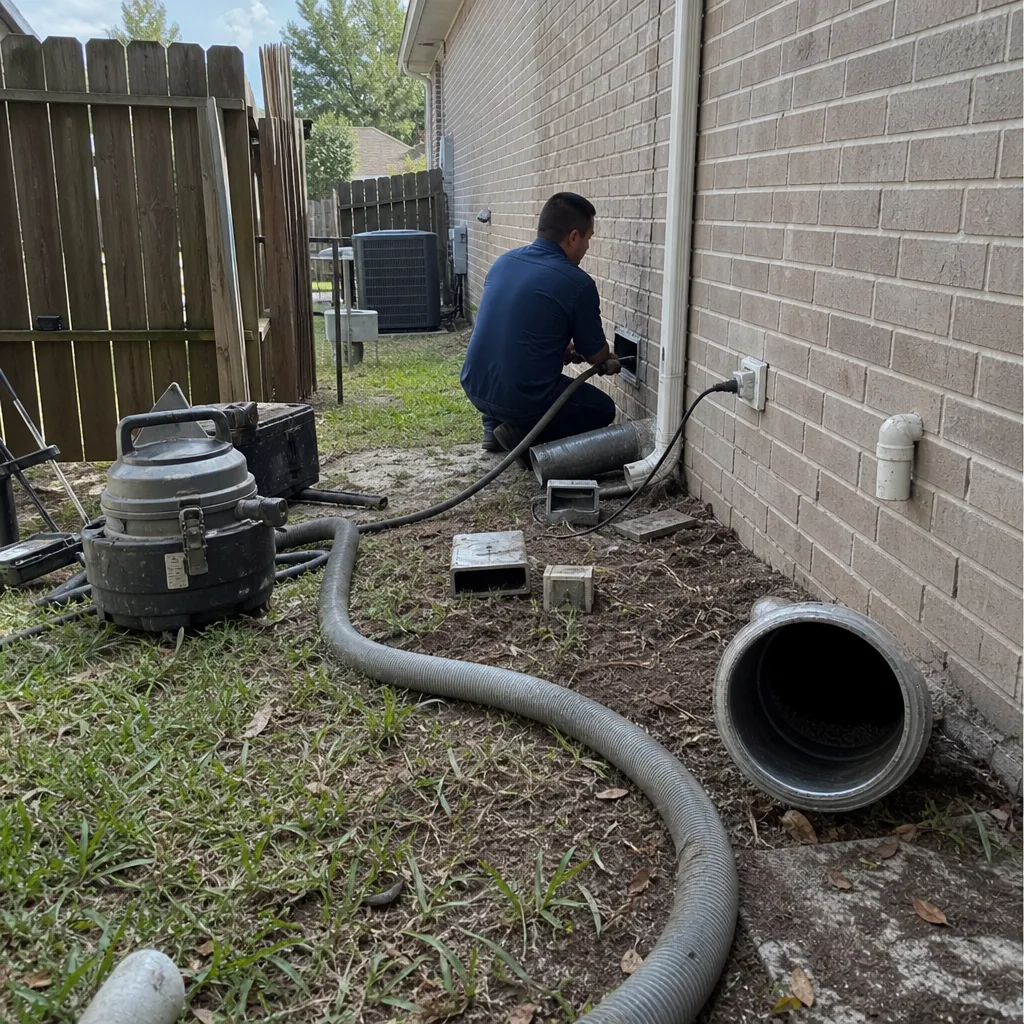 Before
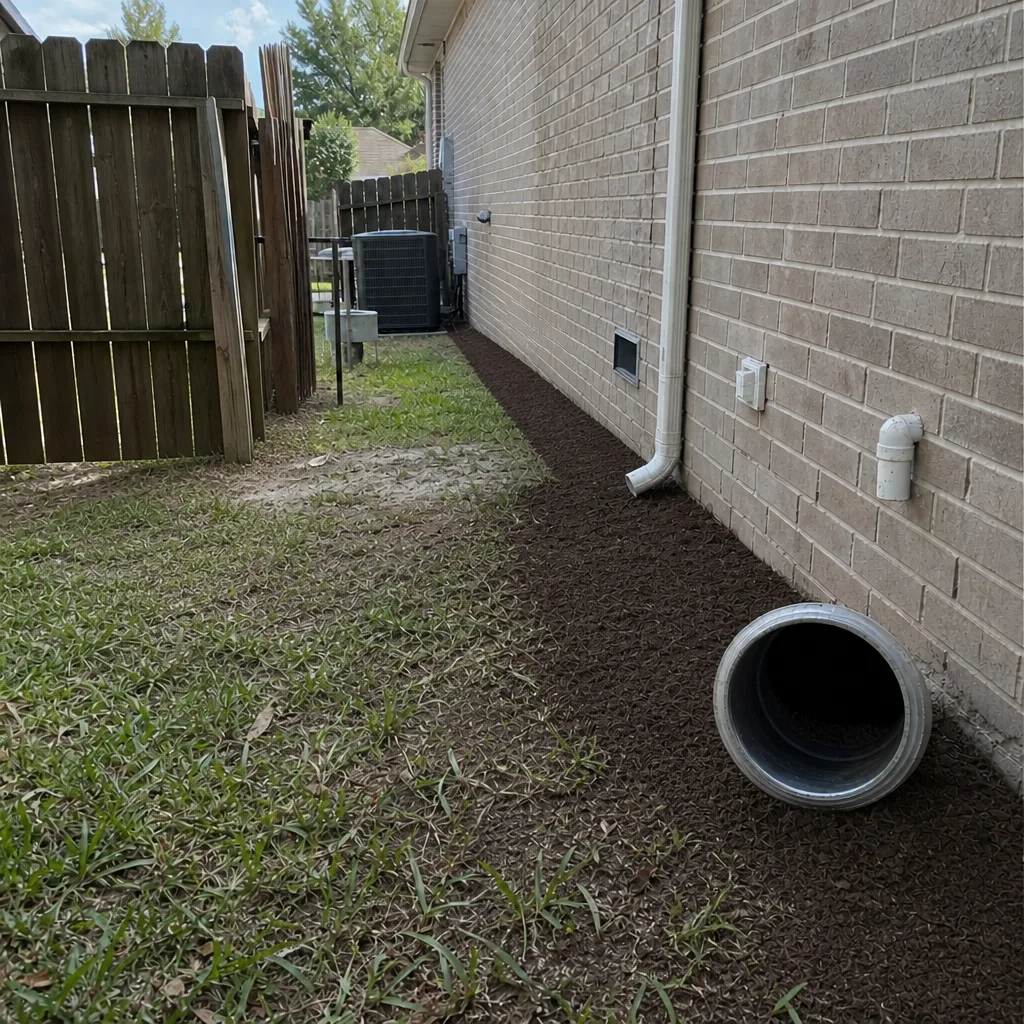 After
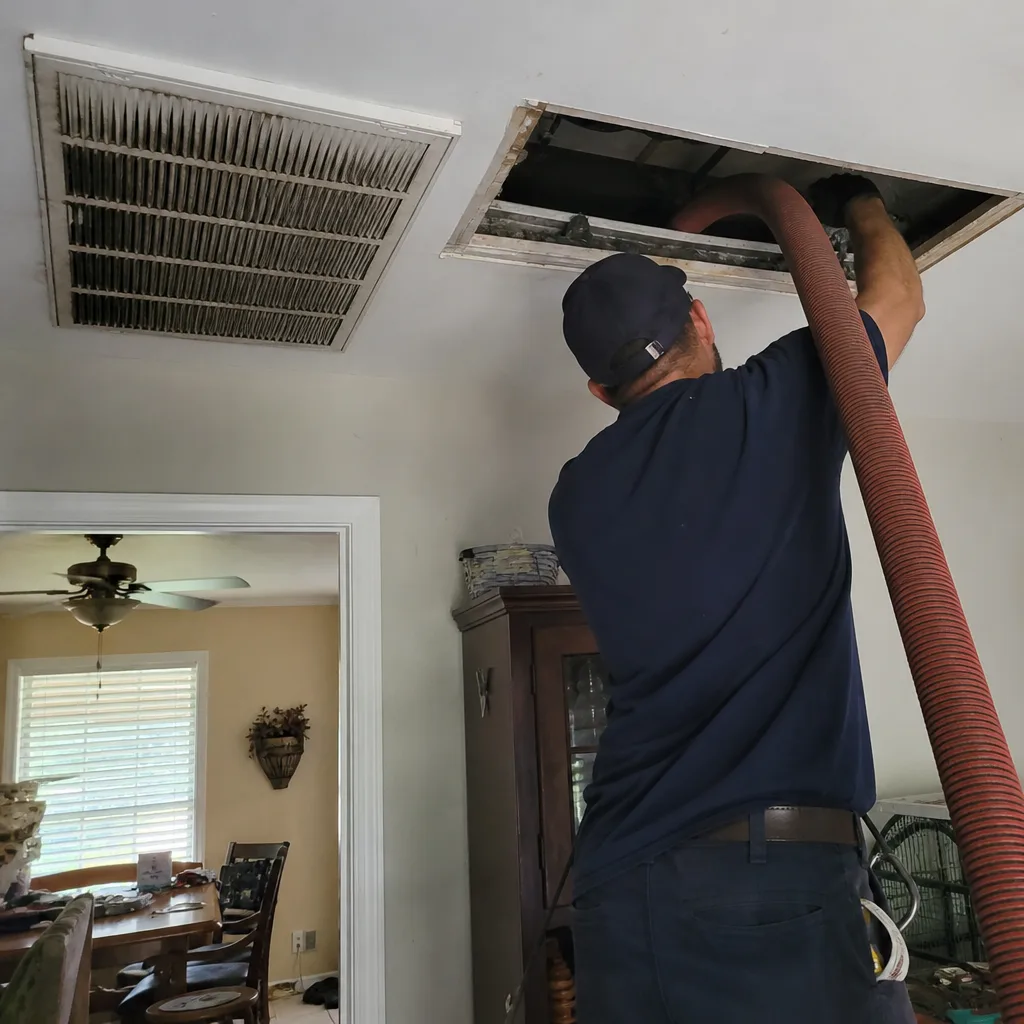 Before
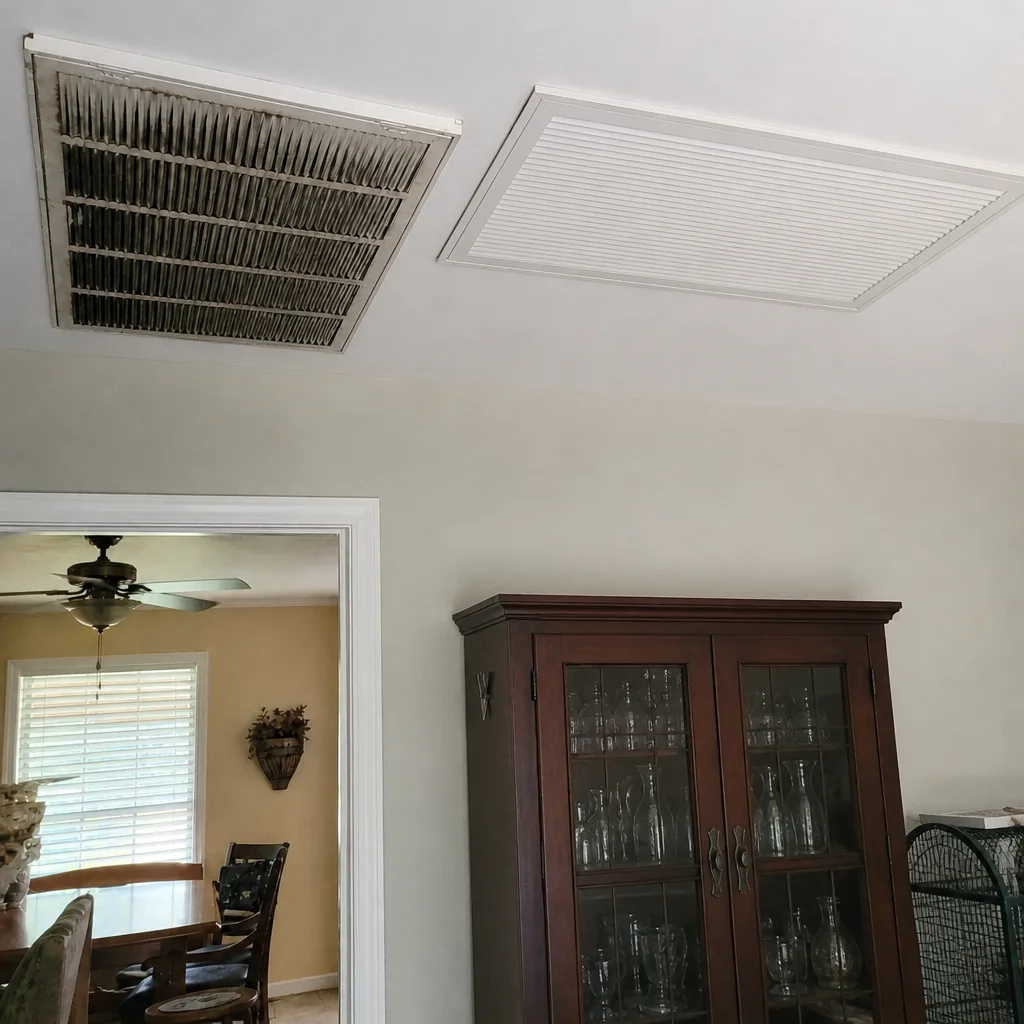 After
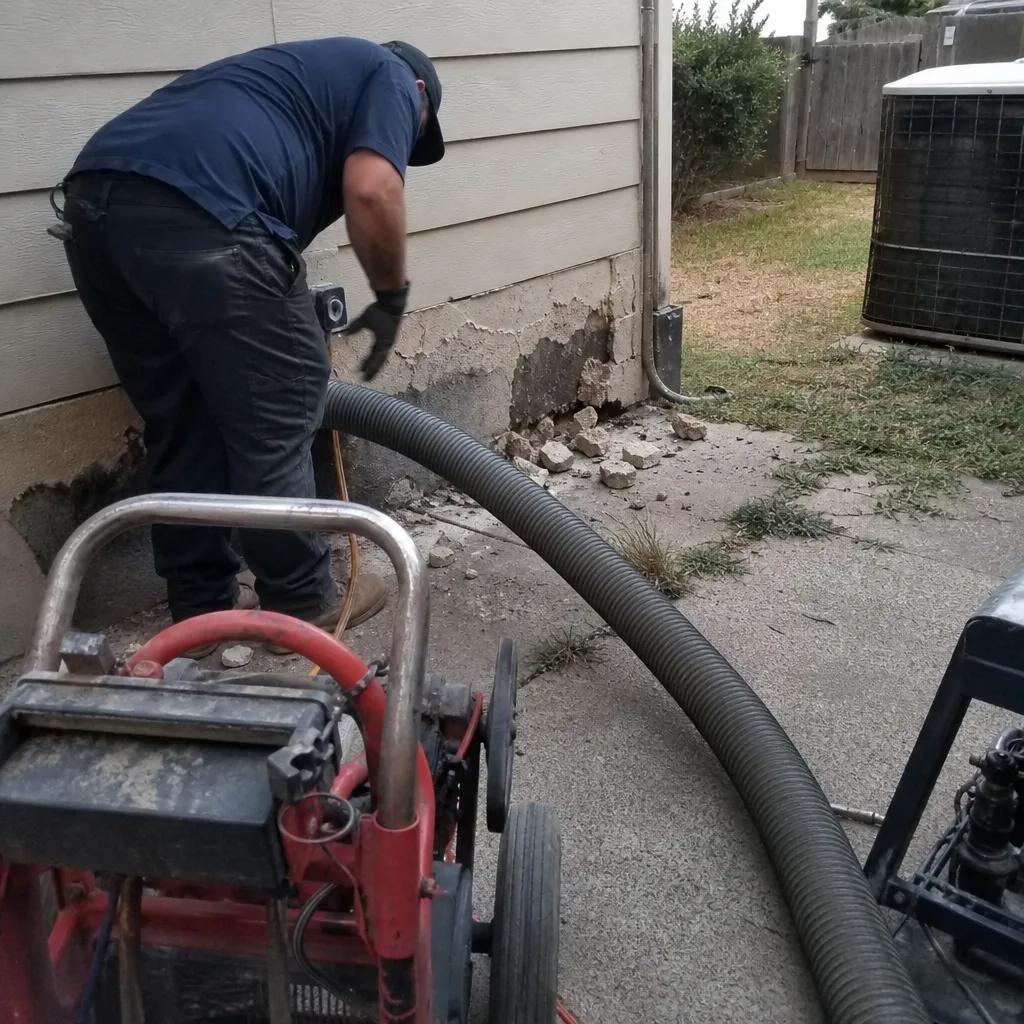 Before
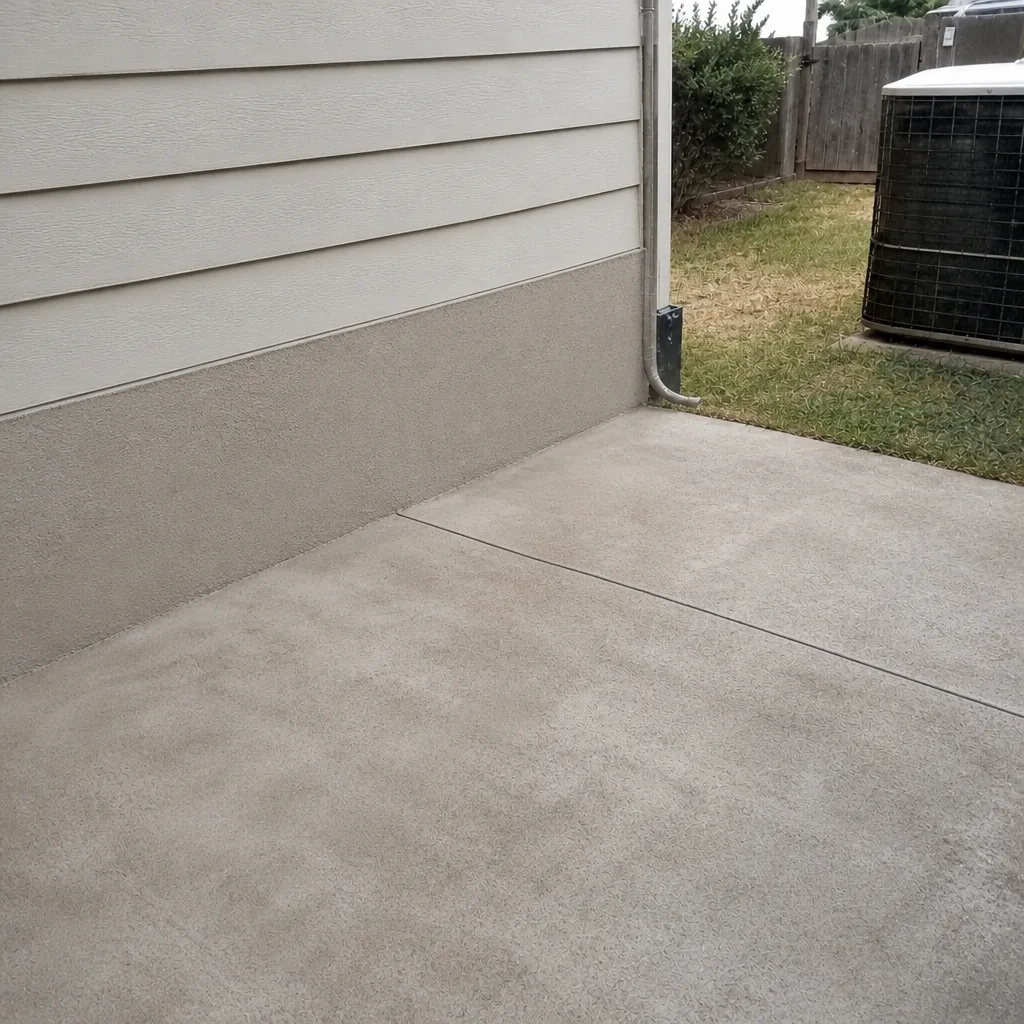 After
When to Call a Professional
Call when the checklist turns up something you can’t rule out on your own. Water staining at a register, a musty smell that survives a filter change, visible debris in a branch duct, rodent activity, or a filter that clogs in under two weeks all warrant a professional look. So does any major storm that passes through the area, or moving into an older Clear Lake home where you don’t know the system’s history. This isn’t a “clean before it’s too late” pitch. It’s a “get a real diagnostic before the vague smell becomes a bill” recommendation.
Clear Lake Air Duct Cleaning offers free estimates in Clear Lake. The estimate is per job and written down before any work starts, so the price you agree to is the price you pay, with no per-vent add-ons after the technician arrives. Call (833) 513-8670. We answer 24/7. Fast dispatch from 7am to 7pm, Sunday through Friday.
Frequently Asked Questions
There’s no fixed schedule that fits every home. Most Clear Lake homes need a professional inspection once a year and an actual cleaning only when evidence supports it: visible debris, a persistent musty odor, or a documented jump in filter loading or energy use. If you’re in a recently renovated home or one with pets, you may need to check more often.
An inspection is a diagnostic visit that reviews airflow, connections, moisture, and your log against the current state of the system. A cleaning is a corrective action taken when the inspection finds something that warrants it. Skipping the inspection and going straight to cleaning is how a lot of unnecessary jobs get sold.
Yes. Confirm the filters are clean, note the condition of any duct connections near the attic hatch, and check that the indoor and outdoor units are clear of debris. After a named storm passes, inspect the registers for water stains, loose tape, or a change in airflow, and log what you find so it’s ready for an inspection if needed.
Not effectively. A residential vacuum doesn’t have the suction or the brush tooling to reach the branch runs, and it can actually stir up dust and push it into the living space. Professional equipment like the Rotobrush and Nikro systems the local pro uses is purpose-built for the job, which is why it gets results a consumer vacuum can’t match.
Low quotes often skip the camera inspection, the blower and coil cleaning, and the sealing scope, so you’re paying less for less work. Others price per vent and add charges once on site. One flat price per system, agreed before work starts, is how the local pro we connect you with prices the job, with before-and-after photos of your own ducts so you see what was done.
It turns guesswork into evidence. When you log what you saw and smelled each month and keep photos, a technician can compare your history to the current state and tell whether a problem is chronic or new. That changes the recommendation, and it stops you from paying for a cleaning every year when your system actually needed a repair or nothing at all.
The Bottom Line
Duct maintenance in Clear Lake is less about a cleaning date and more about a running record tied to local seasons. Check filters on a runtime-based schedule rather than a fixed calendar. Do the register self-checks monthly. Log what you see, smell, and hear, and keep dated photos so a trend shows up. Book a professional inspection yearly and after major storms, and let evidence, not a sales pitch, decide when cleaning is warranted. When repair and sealing need attention, fix them alongside the cleaning so the whole system stays sealed. Clean, sealed, and sanitized is the goal, and the checklist is how you get there.
Clear Lake Air Duct Cleaning is a full indoor-air-quality specialist with duct cleaning, dryer vent cleaning, HVAC cleaning, air quality and sanitizing, and duct repair and sealing under one roof. Our technicians have up to 10 years of experience, and we work with trusted product lines like Honeywell, Aprilaire, Abatement Technologies, and Guardsman. Learn more on our Clear Lake Air Duct Cleaning home page, and call (833) 513-8670 for a free estimate. We answer 24/7. Fast dispatch from 7am to 7pm, Sunday through Friday, closed Saturday.
Written by the team at Clear Lake Air Duct Cleaning.