
Last updated November 25, 2026
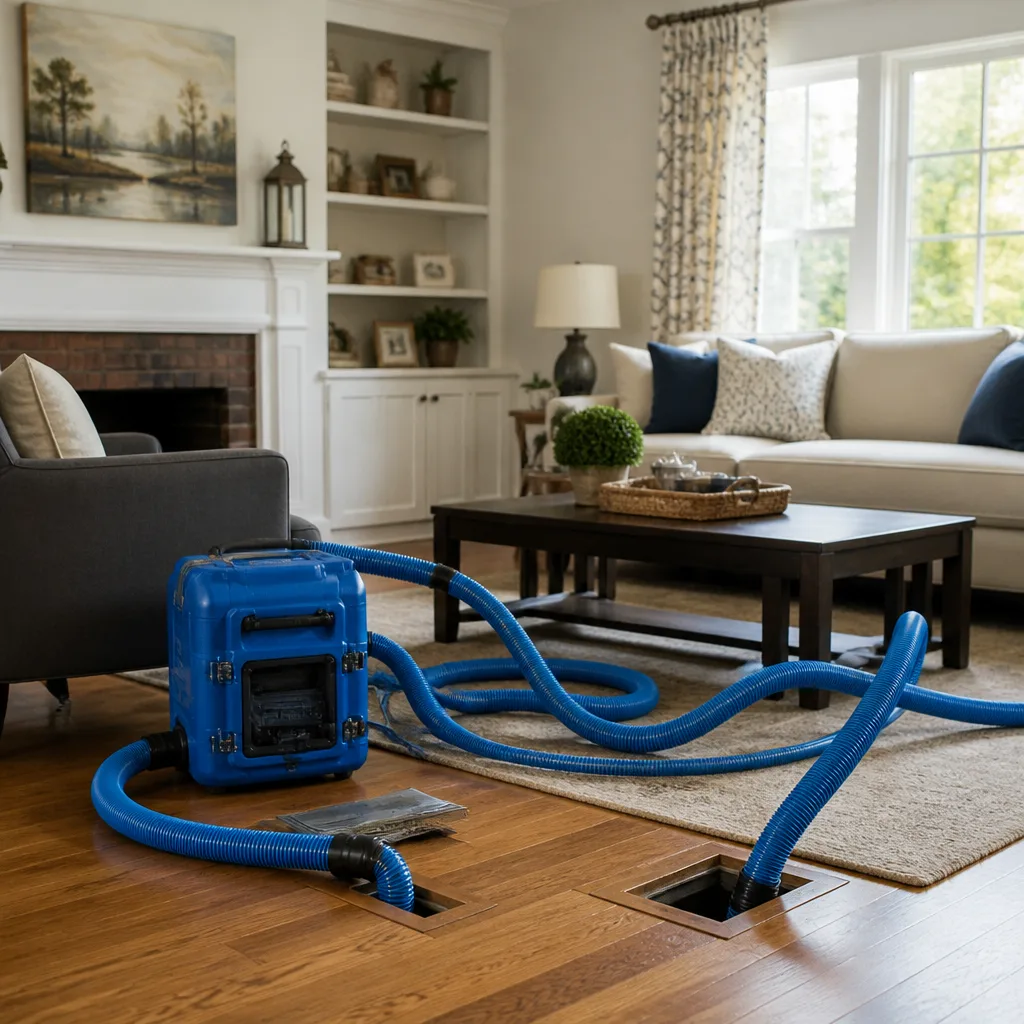 Whole-home duct cleaning
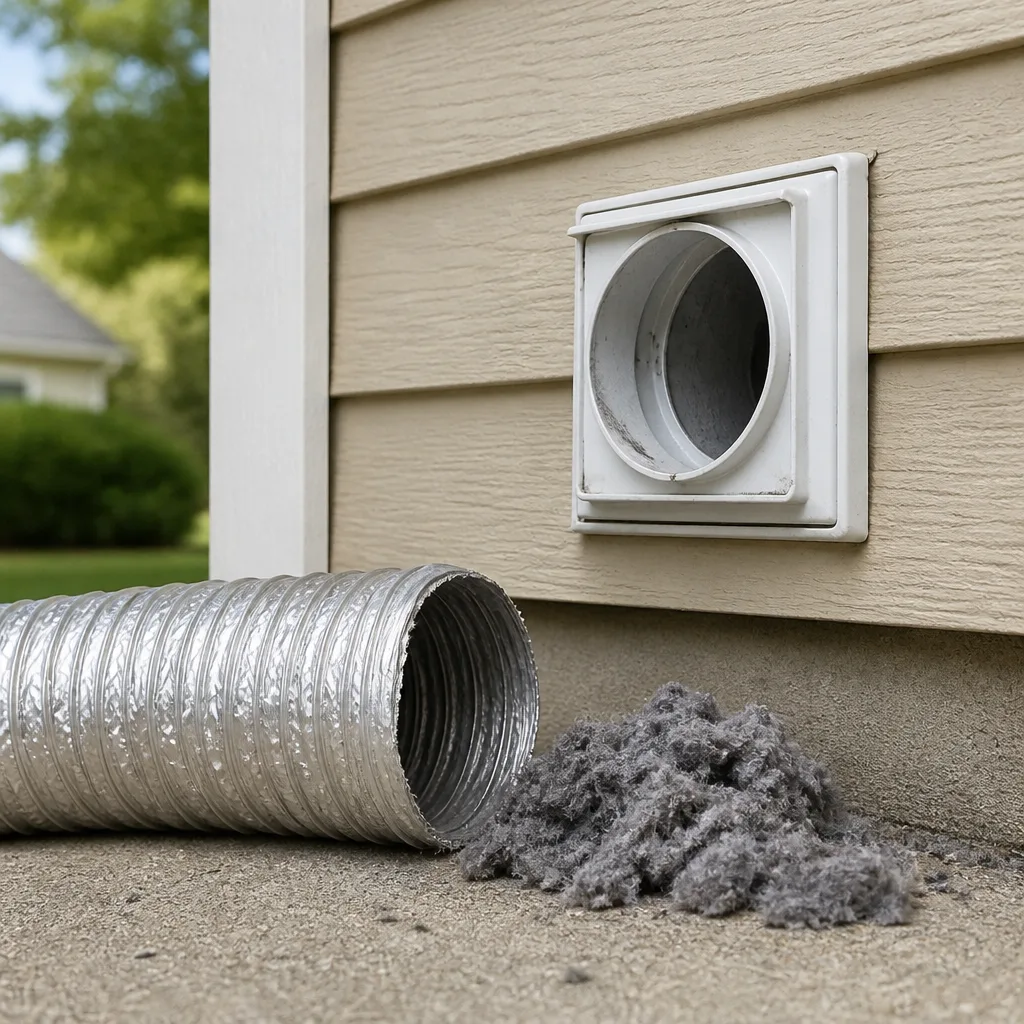 Dryer vent cleaning
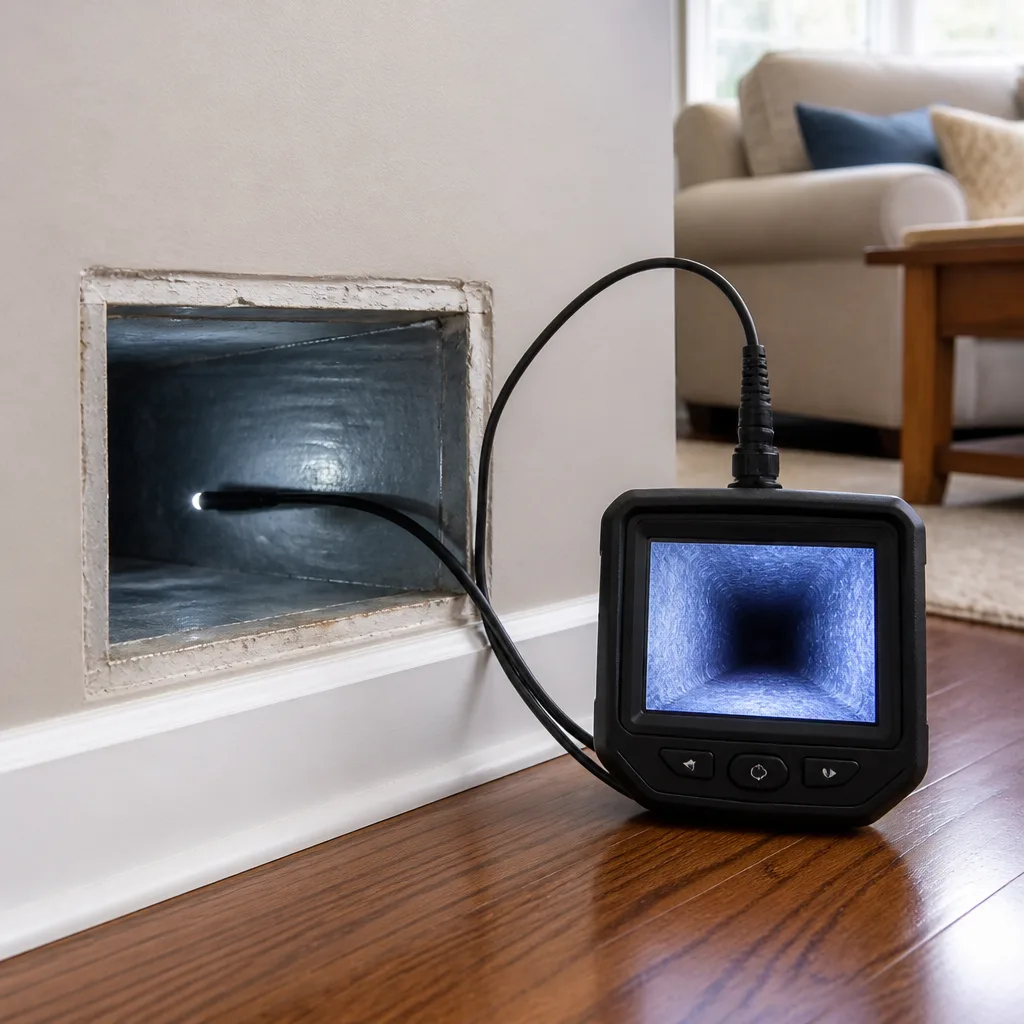 Camera inspection
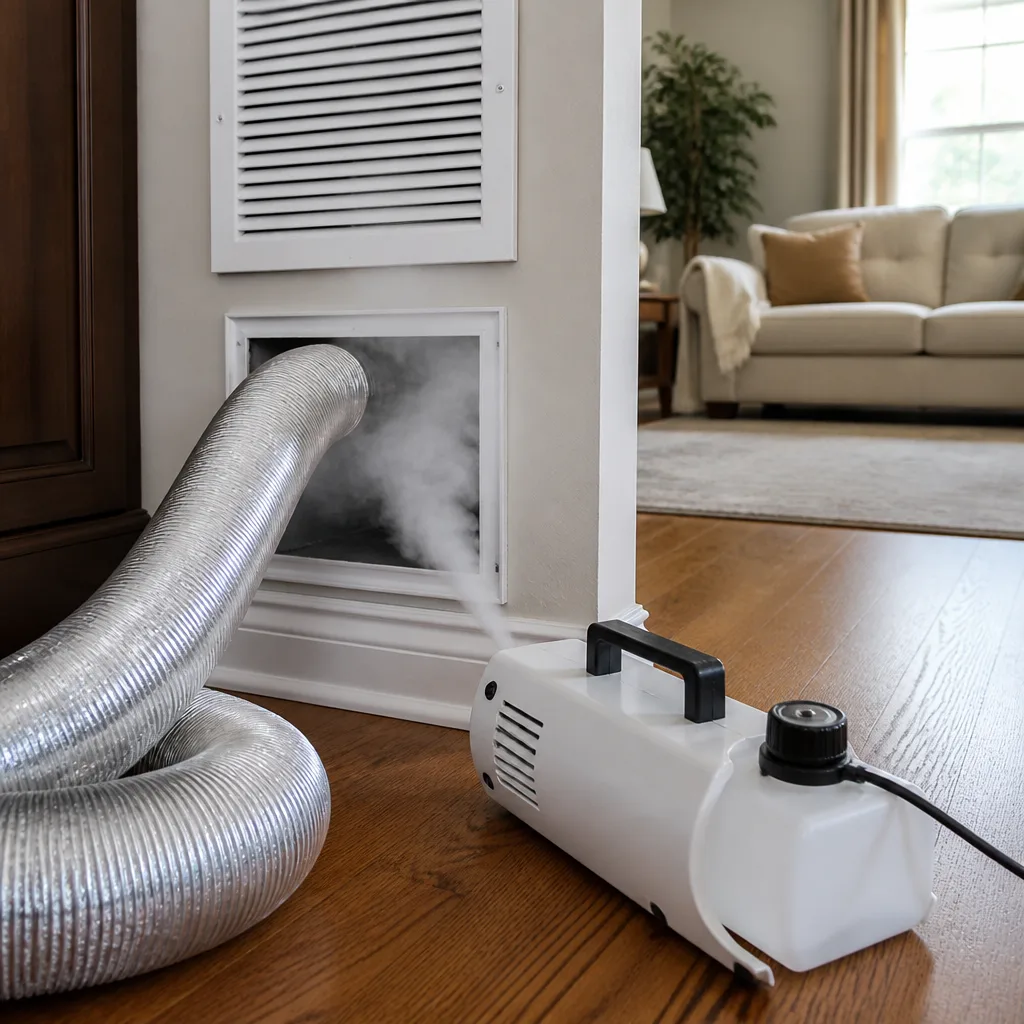 Sanitizing & deodorizing
Whole-system duct and dryer vent check with before-and-after photos - you see exactly what came out of your vents
That "$99 whole-house special" is a bait ad - the real number appears once they are in your hallway, or the "clean" is a shop-vac at the register. We photograph the inside of your ducts before and after instead.
Air Duct Cleaning Permits, Codes & Inspections in Clear Lake, TX: What You Need to Know
Here’s the part most homeowners don’t hear until it matters: if a technician finds a collapsed duct section behind a wall and patches it without a permit, the liability for that unpermitted repair sits with you, not the contractor who did the work. Cleaning your ducts is largely unregulated in Texas. Repairing or modifying them is a different story, and the line between the two is thinner than most people assume. This guide walks through what’s actually regulated, how Harris County and City of Houston rules can both touch a Clear Lake address, and what documentation protects you at resale, at an insurance claim, and at a home inspection. The goal isn’t to scare you into a permit for a routine cleaning. It’s to help you recognize the moment a duct job stops being a cleaning job.
Quick Answer
Air duct cleaning itself generally does not require a permit in Texas or in the Clear Lake area. But repair, replacement, or modification of ductwork can fall under mechanical code and may require a permit, and in some cases a licensed HVAC contractor. Whether a permit applies depends on your jurisdiction (City of Houston if you’re inside city limits, Harris County if you’re in unincorporated Clear Lake) and on whether the work changes the duct system’s structure rather than just cleaning it.
Styles & brands we work with
- Whole-home duct cleaning
- Dryer vent cleaning
- Camera inspection
- Sanitizing & deodorizing
Table of Contents
- Cleaning vs. Repair: Where the Legal Line Sits
- What Texas Actually Regulates About Ductwork
- Clear Lake Jurisdiction: Houston vs. Harris County
- When Duct Sealing Crosses Into Licensed Work
- What to Ask a Contractor to Document
- Home Inspections and Permit Gaps at Closing
- How the Permit Process Typically Goes
- Permits, Insurance and Liability
Cleaning vs. Repair: Where the Legal Line Sits
Everything in this guide turns on one distinction. Cleaning removes dust, debris and buildup from the inside of ducts that are already in sound condition. Repair or modification changes the duct system itself: replacing a run, adding a run, reconnecting a disconnected section, sealing or rerouting, or changing how air moves through the system. The first is a maintenance activity. The second can be construction, and construction is where permits and licensing enter the conversation.
In our experience, most homeowners call for air duct cleaning and only learn about the repair side when a technician finds something wrong during the process. A disconnected flex duct in the attic, a crushed section under a joist, or a run that was never properly sealed from the start. Once that’s found, the question flips from “clean it” to “fix it,” and that’s a different category of work.
Three simple tests help you know which side of the line you’re on:
- Is the system being cleaned only? No new materials, no removed sections, no change to airflow paths. This is cleaning.
- Are materials being added to seal or reconnect a joint? This can be repair work. Small sealing with mastic or approved tape at an accessible joint is usually a gray area, but structural replacement of a section is not.
- Is the system being modified? Adding a run, removing a run, resizing, or moving a duct changes the system. This is mechanical work and typically falls under code.
The easy way to remember it: if the technician leaves the duct system in the same shape, just cleaner, that’s maintenance. If the system’s shape changes, you’re in regulated territory.
What Texas Actually Regulates About Ductwork
Texas, like most states, does not regulate duct cleaning itself. There’s no state license to perform duct cleaning, no state permit for the cleaning task, and no state inspection for dust removal. What Texas does regulate is the mechanical work side of HVAC, and that’s where duct repair, replacement and modification live.
Two layers apply:
- State licensing. HVAC work in Texas is licensed through the Texas Department of Licensing and Regulation. If the work being done qualifies as A/C or heating system installation or repair, the person doing it generally needs the appropriate TDLR license. Routine cleaning isn’t covered by that licensing rule; repair of the air delivery system can be.
- Local building codes. Mechanical codes are adopted by the local jurisdiction. Harris County and the City of Houston both operate under adopted building and mechanical codes, and both can require permits for duct system alterations that qualify as construction work.
The practical takeaway is that “who has a license” matters more on repair than on cleaning. Our technicians have up to 10 years of experience and we work on the full air delivery system using professional-grade Rotobrush and Nikro equipment, not shop-vac shortcuts. When a job crosses into repair that requires a TDLR-licensed HVAC contractor, that’s a separate scope with its own rules, and the homeowner is the one who needs to know which scope they’re paying for.
If you’re unsure whether your project is cleaning or repair, ask the contractor to put it in writing. A written scope that names the work as cleaning or as repair is what protects you later.
Clear Lake Jurisdiction: Houston vs. Harris County
Clear Lake isn’t a single incorporated city. It’s a community spanning parts of Houston city limits and parts of unincorporated Harris County, and where your address sits determines which permitting office handles your project if a permit is required at all.
Here’s how the split usually breaks down:
- Inside City of Houston limits. The Houston Permitting Center handles building and mechanical permits for most residential HVAC and duct work that requires one. Homeowners in Clear Lake neighborhoods inside city limits go through Houston.
- Unincorporated Harris County. Harris County handles permitting for many addresses outside city limits. The county’s requirements differ from Houston’s in both process and thresholds.
- Other municipalities adjacent to Clear Lake. Some nearby incorporated cities have their own permitting offices. If you’re near the edge of what most people call Clear Lake, check your address against your city’s records before assuming.
This jurisdictional patchwork is the biggest source of confusion we run into. A neighbor down the street might be under Houston rules and you might be under Harris County rules, and the permit requirement can differ. If your project involves any repair work, call your jurisdiction’s permitting office directly with the address. The person at the counter can tell you in a couple of minutes whether a permit is required for what’s being proposed. It’s the only reliable answer.
When Duct Sealing Crosses Into Licensed Work
Duct sealing is where the code question gets messy, because it splits into three tiers depending on how much the sealant is doing.
- Sealing accessible leak points during a cleaning. Mastic on a joint, approved metal tape on a visible seam, or similar small-scale sealing done by a duct cleaning technician during the cleaning. This is generally treated as maintenance work and doesn’t require a permit. It’s part of leaving the system in better shape than it was found.
- Sealing as a defined remediation scope. A broader sealing project targeting significant leaks across the system, done as a standalone job with its own materials and scope. This sits closer to repair work. Some jurisdictions will treat it as mechanical work requiring a permit; others won’t. Ask the permitting office, and get the scope documented in writing either way.
- Structural repair and reconnection. Replacing a section of duct, reconnecting a severed run, rerouting, adding a branch, or resealing a duct system in a way that changes airflow. This almost always requires a licensed HVAC contractor and may require a permit under the local mechanical code.
Our HVAC cleaning work pairs naturally with sealing because we’re already inside the system. We use Guardsman and Abatement Technologies products because they’re the brands specifiers and remediation professionals rely on, and the choice of materials matters here. A homeowner who later needs to prove what went into a repair should be able to point to a named brand, not a generic unlabeled tube.
When the sealing reaches tier three, we step aside for the licensed HVAC contractor to handle the regulated portion. Duct repair and sealing is a service we offer, and knowing when the work needs to leave the cleaning scope and enter the licensed scope is part of doing that service honestly.
What to Ask a Contractor to Document
Whatever the scope, the paperwork is what protects you. This is the part most homeowners skip, and it’s the part that matters at resale, at an insurance claim, and at a home inspection years down the road.
Ask for these in writing before work starts:
- Before-and-after photos of your own ducts. Not stock images, not generic pictures. Your system, your address, taken during the job. Before-and-after photos are the single best proof that the work was actually done.
- The written scope of work. What’s being cleaned, what’s being repaired, what materials are being used, and whether any of the work constitutes repair versus cleaning.
- Materials by name. Mastic brand, tape type, sanitizing product brand. If it’s a named professional product, it can be verified. If it’s unnamed, ask why.
- Whether a permit is being pulled. If the work is repair-level and your jurisdiction requires a permit, the permit will be issued to someone with a license, and the permit number should appear in your paperwork.
- The invoice with the scope described. Not just “duct cleaning: $X.” The invoice should say what was done in plain language so a future inspector, buyer or insurer can read it and understand.
A single flat price per system agreed before work starts is what we work to, and the written estimate is the document that makes the scope auditable. If a contractor won’t put the scope in writing, that’s a reason to keep looking.
Home Inspections and Permit Gaps at Closing
Here’s where duct work and permits intersect with something most homeowners never think about: the resale inspection. A home inspector looking at a property will typically note visible duct issues: disconnected runs, crushed sections, unsealed joints where air is escaping, poorly supported flex duct, or evidence of a prior repair that wasn’t documented. None of those may be code violations. But if a permit was required for a repair and no permit was pulled, the gap can surface at the worst possible time.
At closing, a buyer’s inspector finds a prior duct repair. The seller has no permit, no scope, no photos, no record of who did the work. The buyer’s agent wants it addressed before closing or wants a credit against the sale price. What could have been a $400 documented repair becomes a negotiation at the eleventh hour, with no way to defend the work that was actually done. That’s the difference documentation makes, and it’s why we push so hard on photos and written scope even on jobs that don’t require a permit.
The other side of that: when a permit was pulled and closed out, the record is public. A future buyer’s inspector can confirm that a duct repair was done and inspected, and the conversation ends there. In Clear Lake where a lot of homes have been through multiple rounds of HVAC service over the years, that paper trail is worth more than the permit fee.
If you’re selling a Clear Lake home and aren’t sure what was documented on past duct work, ask your contractor of record first. If there’s no record, a current inspection and a documented cleaning can at least put a baseline in place. Call us at (833) 513-8670 and we can walk through what’s viable.
How the Permit Process Typically Goes
When a duct repair does require a permit, the process is straightforward and usually a matter of paperwork and inspection scheduling. Here’s roughly what it looks like, from a homeowner’s point of view:
- Confirm jurisdiction. Check your address against Houston or Harris County records, whichever applies, before you assume. Your permitting office can tell you in minutes.
- Get a written scope from the contractor. What’s being repaired, what materials, what the finished work will look like. The permitting office will want this.
- Submit the permit application. Usually filed by the licensed contractor performing the work, in the jurisdiction where the property sits.
- Pay the permit fee. This is the fee to the city or county, not to the contractor, and it’s separate from your duct work estimate. Ask the permitting office for the current fee schedule.
- Schedule the inspection. Most residential mechanical permits require at least one inspection. Depending on the job, it may be a rough-in inspection before closing up walls, a final inspection, or both.
- Get the permit closed out. This is the record that matters. A closed-out permit is verifiable by title companies, inspectors, and future buyers.
Timelines vary by jurisdiction and by how busy the inspection queue is. We don’t promise timelines for the permitting office, because those depend on the office. What we can do is make sure the scope we hand you is clear enough to submit and that the work performed matches what was permitted.
For dryer vent cleaning, the code story is different. Dryer vent work can involve fire safety regulations on vent material and length, and a thorough vent cleaning that clears lint buildup is the preventive step that matters most. If a dryer vent requires rerouting or modification, that can cross into the same repaired-work territory.
Permits, Insurance and Liability
This is the part that rarely gets said out loud. If an unpermitted repair later causes a problem, the liability sits with the person who owns the home, which is you. The contractor who did the repair may be gone, may not be reachable, and may not carry coverage for unpermitted work. Your homeowners policy may cover the resulting damage or it may deny the claim on the grounds that a permit should have been obtained. Your position on both questions depends almost entirely on whether the work was permitted and documented.
If the work did require a permit and you can’t prove it was pulled, that’s a weaker position. If the work was cleaning only, which doesn’t require a permit, the photos and the invoice are what prove the scope. It’s the same documentation point from earlier, seen from the other direction.
A few practical moves:
- Ask about permits before work starts. Not after. If the answer is “this doesn’t need one,” ask why not, and get that in writing.
- Keep the permit records with the home file. You may need them years later at resale.
- Have a conversation with your insurer if a duct repair is happening. Not because anything’s wrong, but because insurers vary on how they treat unpermitted work, and knowing where you stand is better than finding out later.
- Use documented materials. Guardsman and Abatement Technologies products come with brand names and can be sourced. Generic materials can’t be verified.
We can’t give insurance advice, and we don’t claim to. What we can do is make sure that the work we perform is cleanly documented and that any repair scope that leaves our lane is handed to a TDLR-licensed HVAC contractor who can pull the permit in the first place.
Common Mistakes to Avoid
- Assuming “cleaning” is the whole scope. If a technician starts repairing ducts without discussing it first, ask whether that repair crosses into permit territory. The answer changes what you’re paying for and what your liability is. Get the scope clear before the work starts.
- Skipping the photo request. Before-and-after photos of your own ducts are the single easiest proof of work performed. In Clear Lake where homes have been through multiple HVAC rounds, a documented cleaning is worth far more than a discount on the same job done blind.
- Taking “we’ll take care of it” as documentation. A verbal promise isn’t a scope. Ask for the scope, the materials by name, and the photos. If any of those is refused, that’s your answer.
- Going with the cheapest bid on a repair that needs a permit. Low bids on duct repair often don’t include the licensed scope or the permit. The savings evaporate the moment a problem at resale or at a claim requires you to prove the work was done properly.
- Ignoring jurisdiction. Whether you’re under Houston or Harris County rules depends on your specific address. The permitting office is the only authoritative answer, and it’s a call that takes minutes.
- Treating duct repair and duct cleaning as interchangeable. They’re not. Cleaning is maintenance. Repair is mechanical work. Responding to a repair quote with a cleaning budget leads to a repair that wasn’t done right.
- Skipping the pre-sale documentation check. If you’re selling a Clear Lake home, pull your duct work records before the buyer’s inspector does. A documented history is a smoother conversation than an unpermitted repair discovered at closing.
See the difference
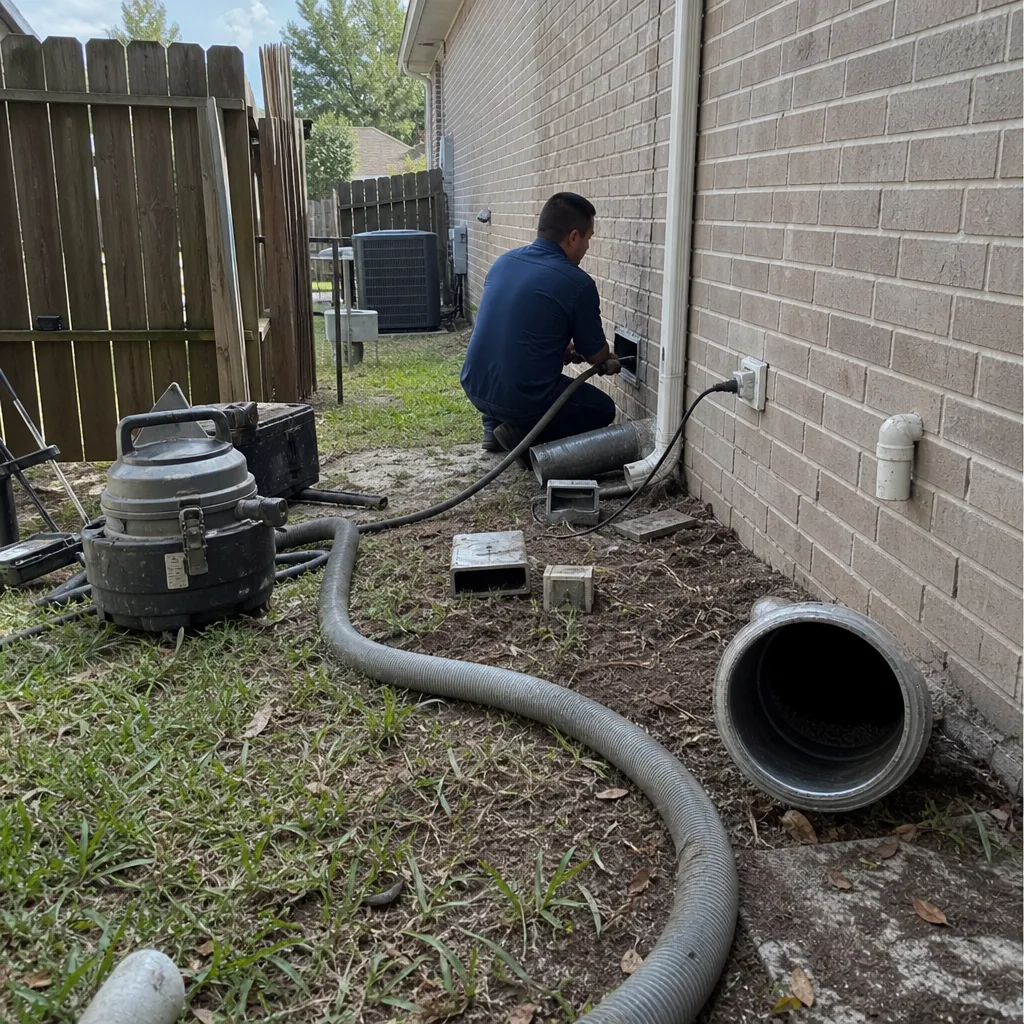 Before
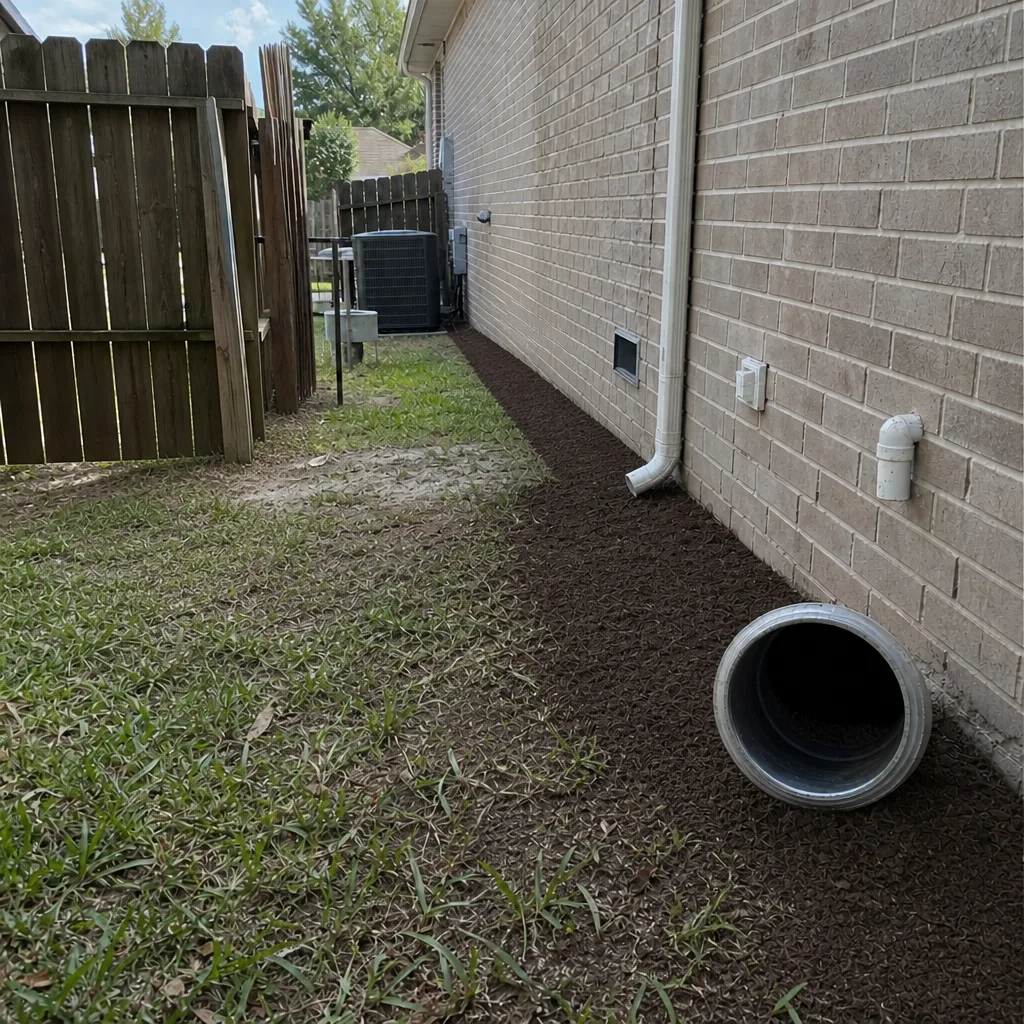 After
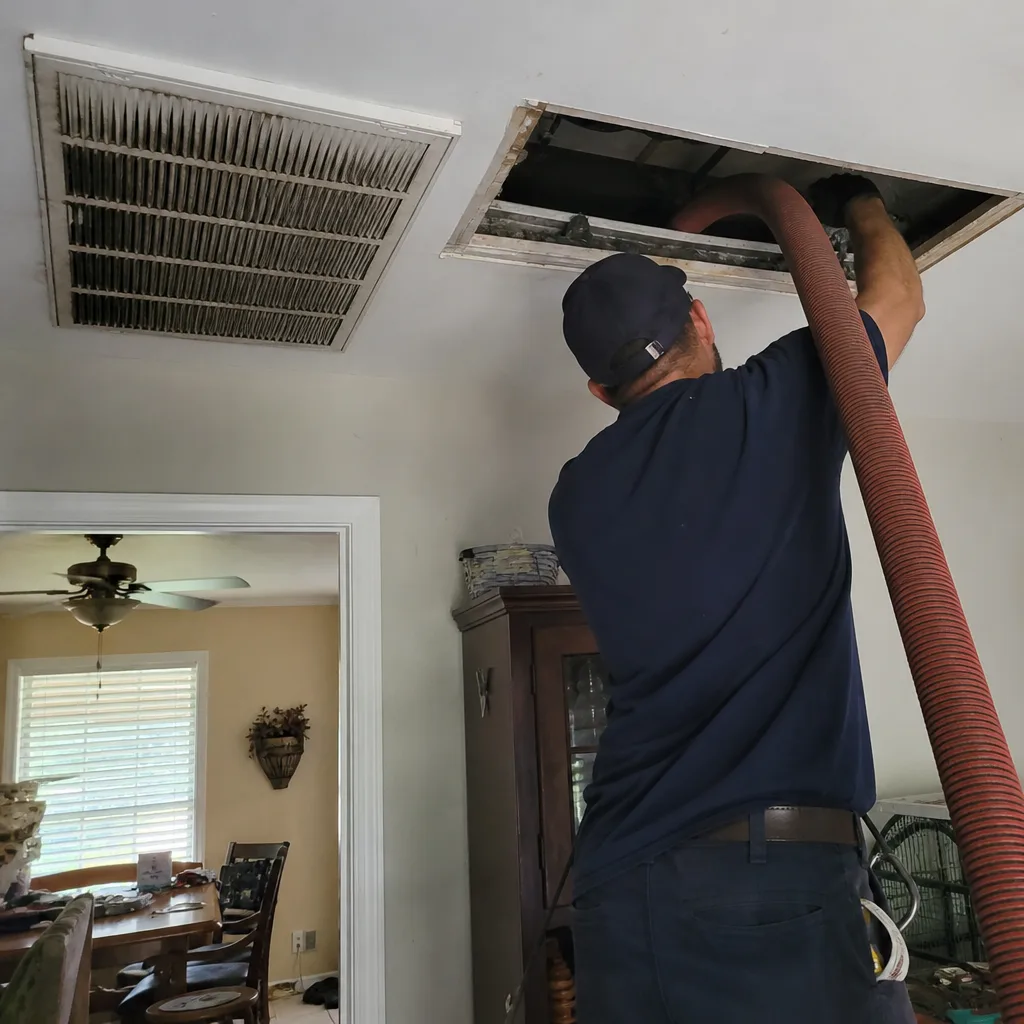 Before
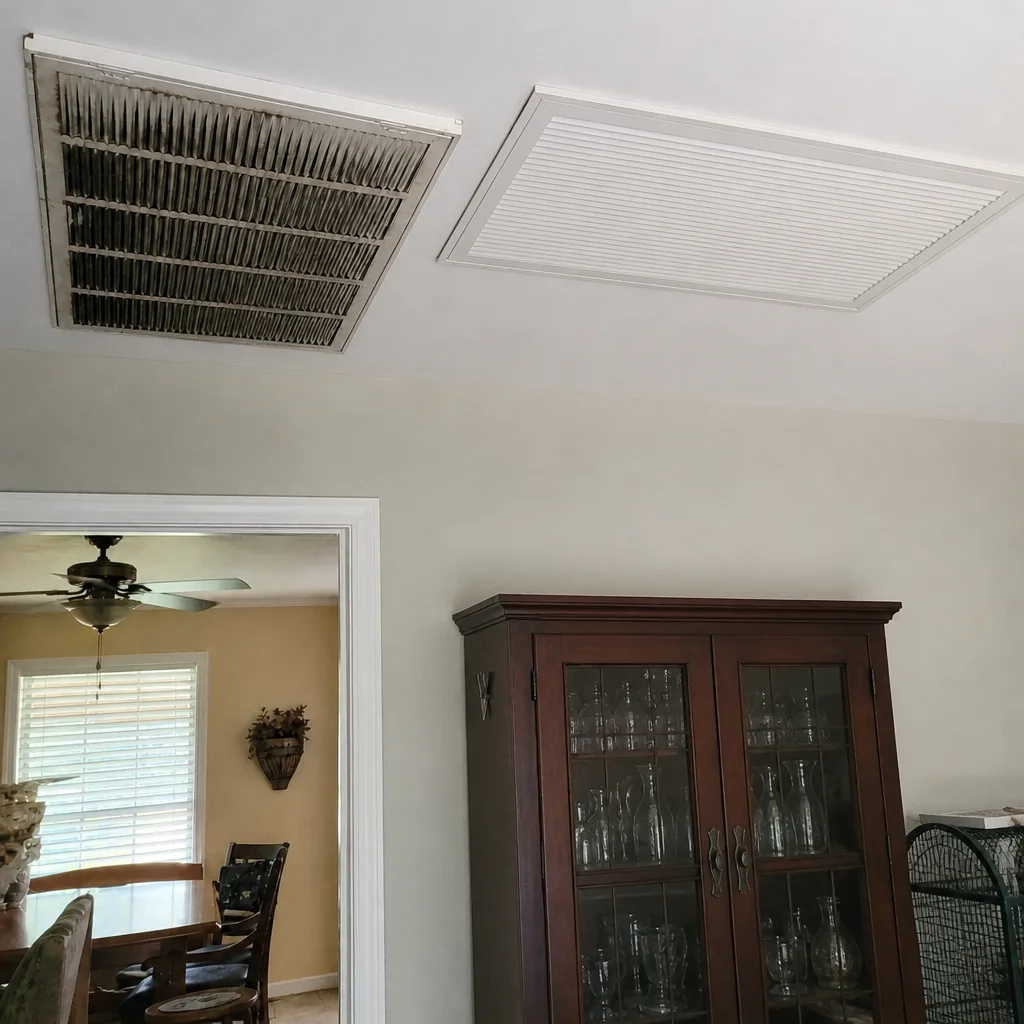 After
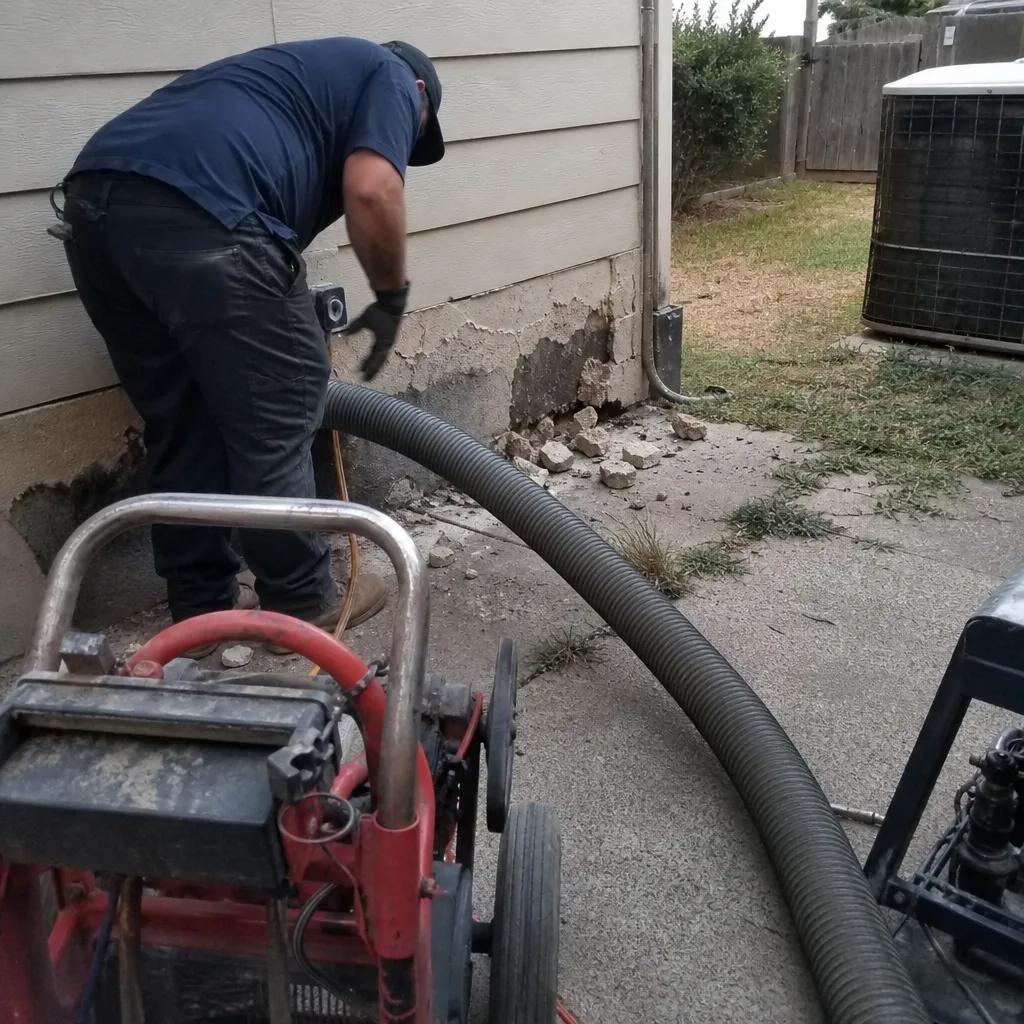 Before
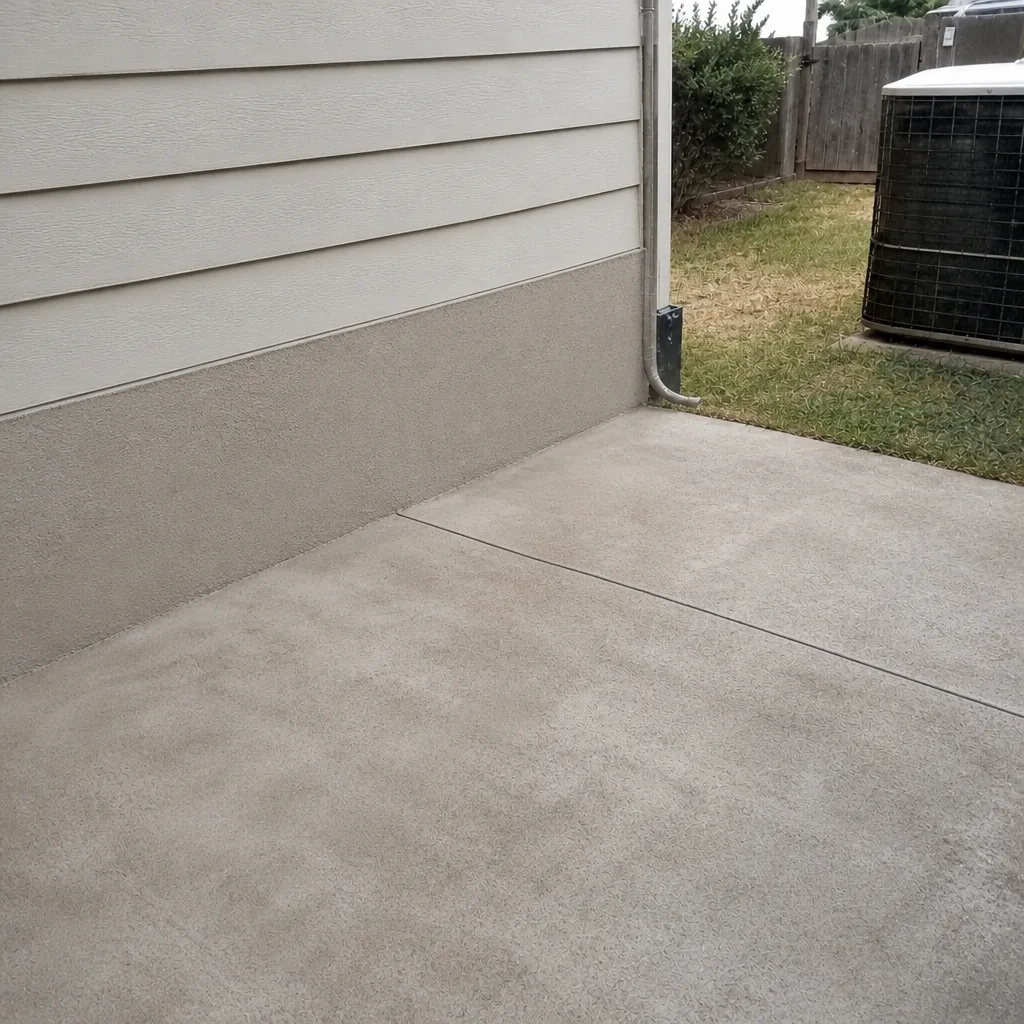 After
When to Call a Professional
Call a professional when any of these apply: the ducts haven’t been cleaned in years and you’re noticing dust around the vents, persistent allergy symptoms, or visible debris inside register openings. Call when a renovation recently finished and construction dust may have entered the system. Call when a technician finds a disconnected, crushed or poorly supported run and you need the repair done properly with documentation. Call when you’re selling or buying a Clear Lake home and want a documented baseline on the ductwork. And call when a duct issue is suspected but you’re not sure whether it’s cleaning or repair, so a professional can size the scope before you decide.
Clear Lake Air Duct Cleaning offers free estimates in Clear Lake. Call (833) 513-8670. We answer 24/7. Fast dispatch from 7am to 7pm, Sunday through Friday. You’ll get a written scope, a single flat price per system agreed before work starts, and before-and-after photos of your own ducts.
Frequently Asked Questions
No, air duct cleaning itself does not require a permit in Clear Lake or anywhere in Texas. Cleaning is unregulated as a maintenance task. If the job crosses into repair, replacement, or modification of ductwork, that can require a permit under the local mechanical code, and the requirement depends on whether you’re under City of Houston or Harris County jurisdiction. Call (833) 513-8670 for an exact quote on your scope, estimates are free.
Duct repair requires a licensed HVAC contractor when the work qualifies as mechanical work: replacing sections, rerouting, adding or removing runs, or modifying the system’s structure. Small sealing with approved materials during a cleaning is generally treated as maintenance. When in doubt, ask your permitting office for the specific project. Call (833) 513-8670 and we’ll help you figure out which category a repair falls into.
It depends on your specific address. Some Clear Lake neighborhoods are inside Houston city limits and go through the Houston Permitting Center; others are in unincorporated Harris County and go through Harris County. There’s no shortcut here. Call your jurisdiction’s permitting office with the address and confirm before assuming. For duct work estimate questions in Clear Lake, call (833) 513-8670.
Ask for before-and-after photos of your own ducts, a written scope of work, materials named by brand, the permit number if a permit was pulled, and an invoice that describes the work in plain language. Those five items are what protect you at resale, at an insurance claim, and at a home inspection. Call (833) 513-8670 and we’ll go through what applies to your situation.
It depends on the scope. Small sealing at accessible joints during a cleaning is generally maintenance and doesn’t require a permit. Broader sealing done as a standalone scope is closer to repair and may require a permit or a licensed HVAC contractor. The jurisdictional permitting office is the one to confirm, and getting the sealing scope in writing is worth doing either way. Call (833) 513-8670 for an exact quote on sealing work.
Yes, it can. If a buyer’s inspector finds a duct repair with no permit and no documentation, that becomes a closing negotiation: credits, delays, or a demanded re-inspection. A closed-out permit record is public and settles the question. Duct cleaning itself doesn’t require a permit, so a documented cleaning with photos and an invoice is usually enough to establish that no permit issue exists. Call (833) 513-8670 to schedule a documented cleaning.
The Bottom Line
Duct cleaning doesn’t need a permit in Clear Lake. Duct repair might. The line between them depends on whether the system’s shape changes, not just its cleanliness. Whether you’re under Houston or Harris County rules depends on your address, and the permitting office is the only authoritative source for your specific case. What you can control regardless of jurisdiction: get the scope in writing, get before-and-after photos of your own ducts, get materials named by brand, and get the permit number if a permit applies. That paper trail is what protects you at resale, at a claim, and at a home inspection. If a technician offers to make a repair without discussing the scope first, ask. The answer you get tells you a lot about the contractor you’re working with.
Schedule Your Free Estimate
When you’re ready to look at your ductwork with a professional, Clear Lake Air Duct Cleaning offers free estimates across Clear Lake. Call (833) 513-8670. We answer 24/7. Fast dispatch from 7am to 7pm, Sunday through Friday. We’ll walk through the scope, tell you honestly whether a job is cleaning or repair, and give you a single flat price per system agreed before work starts. Before-and-after photos of your own ducts come with the job. Our technicians have up to 10 years of experience, and we work with professional Rotobrush and Nikro equipment on every call.
Written by the team at Clear Lake Air Duct Cleaning.