
Nikro Air Duct Cleaning in Clear Lake: A Homeowner’s Guide
“Professional equipment” is one of the most elastic phrases in this trade. It can describe a purpose-built commercial vacuum system, or it can describe a shop vac with a longer hose and a decal on the side. Nikro Industries sits at the professional end of that spectrum, and Clear Lake homeowners who understand what the equipment actually does tend to ask better questions when quotes land in their inbox. That’s the whole point of this guide.
What Does Nikro Equipment Actually Do That a Shop Vac Can’t?
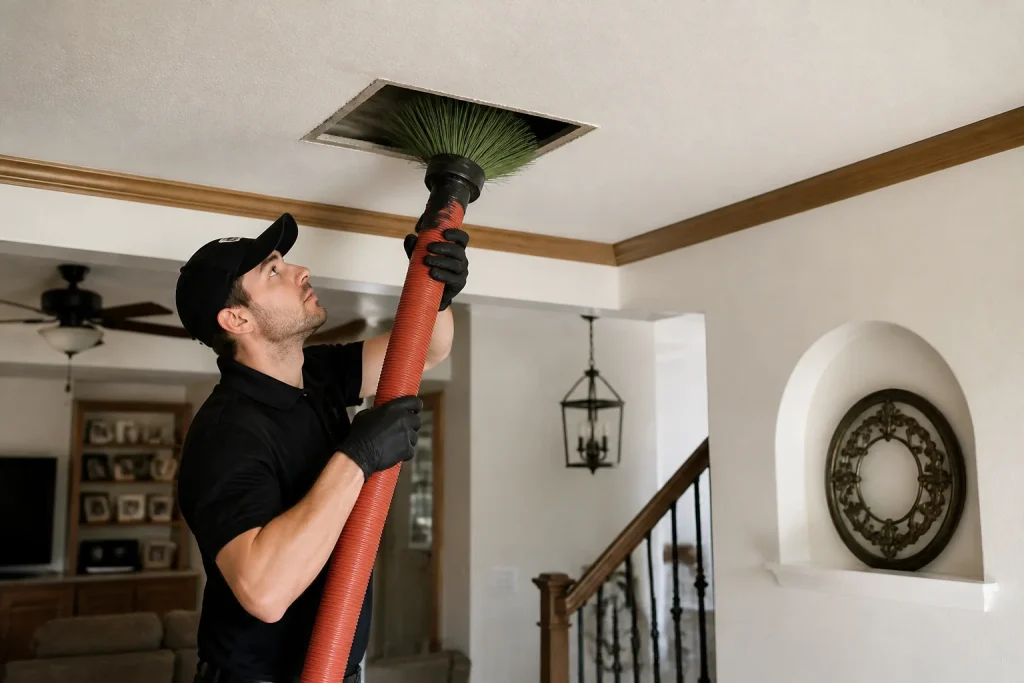
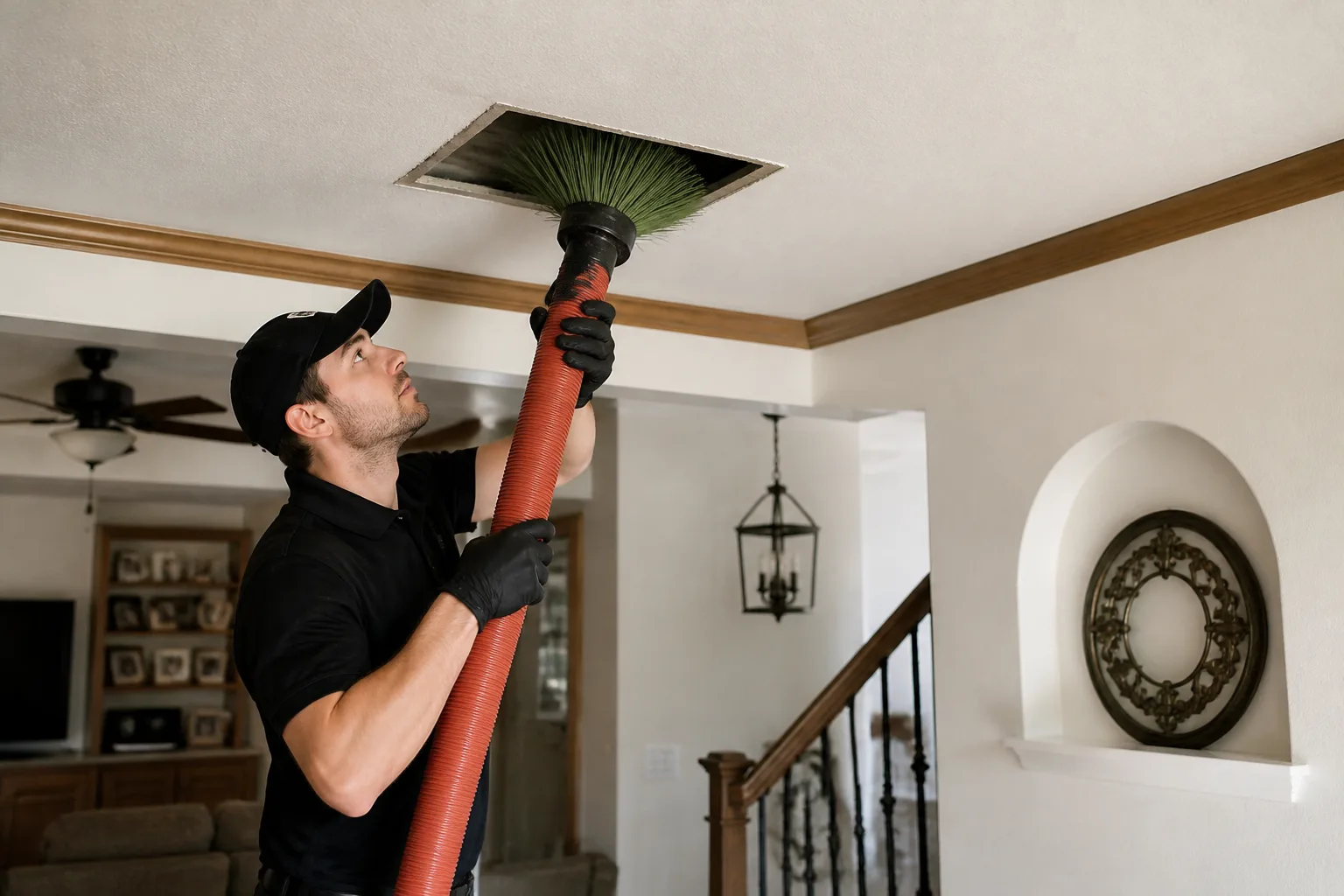
Nikro systems are built around one job: holding sustained negative pressure on an entire duct system while a technician works through it with contact tools. That combination is what separates a real cleaning from a surface pass. A shop vac can pull some loose dust out of a floor register. It cannot put a whole house under negative pressure, and that’s the difference that matters.
Three things define the professional side of the line:
- Sustained negative pressure. The vacuum has to keep pulling against the resistance of long trunk runs and multiple branch lines at once. Once the suction drops, debris simply stops moving.
- HEPA filtration at the machine. Air pulled out of the ducts passes through high-efficiency filtration before it goes back into the room. Without that stage, you’re moving contamination from the ducts into the living room air.
- Contact tool compatibility. Whippers, rotary brushes and air tools all need a stable vacuum source to carry loosened debris away. The tools scrub; the vacuum removes. One without the other is half a job.
In Clear Lake, where the air stays humid most of the year, that third point shows up in a way homeowners don’t expect. Debris inside ducts here is often damp and packed against the metal rather than dry and loose. Dry dust lets go with a light pull. Compacted material needs agitation plus strong sustained suction to break free and travel. We operate Rotobrush and Nikro systems precisely because the Gulf Coast humidity makes the lighter end of the equipment spectrum fall short.
Why Negative Pressure Containment Matters in High-Humidity Clear Lake Homes
Negative pressure means the duct system is under vacuum while it’s being cleaned. Air moves from the house into the ducts, not the other way around. Every register and return is sealed, the vacuum pulls from one point, and loosened material goes to the machine instead of settling back into the bedroom.
That matters most when there’s any suspected biological growth in the system. Clear Lake’s humidity gives mold and mildew a long growing season, and it doesn’t take a flood to get a damp duct. A slow condensate leak, an oversized system that short-cycles, or a return pulled loose in the attic can all keep a section of ductwork damp enough for growth to take hold. Under containment, that material goes into HEPA filtration at the machine and doesn’t drift through the house. Without it, a cleaning can aerosolize exactly what you were trying to remove, and the homeowner gets a headache two days later with no idea why.
This is why professional-grade equipment enables the full-system scope. Trunk lines, branch runs, plenums and return chases all get cleaned because the setup has the suction to hold pressure across the whole system at once. Lesser setups skip the awkward sections – the flex run over the garage, the plenum above the air handler – because they simply can’t pull them. A quote that lists “duct cleaning” doesn’t tell you which sections will actually be touched. Ask.
What Should You Ask a Contractor About Their Equipment Setup?
Brand name alone isn’t enough. Two contractors can both say “Nikro” and be using very different configurations for very different results. The useful questions are about capacity, filtration and method. Ask these before you book:
- What CFM does your vacuum pull? CFM means cubic feet per minute, and it’s the measure of actual suction capacity. Vague answers are a signal.
- What filtration rating is on the machine? Look for HEPA filtration at the vacuum itself, not a filter somewhere downstream.
- How do you access the system? Through the registers, or through a plenum cut and proper reseal? The second is standard for professional work.
- How do you contain the system during cleaning? If they can’t explain negative pressure in plain language, they probably aren’t using it.
- Are you cleaning the returns and the plenum too? The full air path, not just the supply side.
None of those questions require you to become an HVAC specialist. They just separate a contractor who knows their setup from one who bought a rental unit and a business card. In our experience, the Clear Lake homeowners who ask these questions end up with better outcomes, because the conversation itself filters out the bids that were never going to deliver.
How Does Equipment Quality Connect to Duct Repair and Sealing?
Cleaning is only half the job. A duct system that’s leaking 20 to 30 percent of its conditioned air into the attic, the garage or the crawlspace isn’t delivering clean air to the rooms you care about – it’s pulling it from wherever the leaks sit. That’s why we carry full air duct cleaning capability alongside duct repair and sealing. Cleaning the system without addressing the leaks is a temporary fix with a short life span.
Professional-grade equipment makes the repair side possible. Once the system is under containment and the technician can see inside the runs, failing connections, torn flex, crushed sections and disconnected boots become visible. Those get sealed properly, which is what actually stops the air loss. It’s also why we work with Guardsman sealing products and Honeywell and Aprilaire air treatment systems: the same equipment that lets us clean deep lets us verify the system is sealed before a whole-home air purifier or humidifier is installed on top of it. Add a Honeywell or Aprilaire unit to a leaky duct system and you’re treating air that’s already leaking out through the attic before it reaches the bedroom.
Why a Full-System Scope Beats a Register-Only Cleaning
Register-only cleaning is the entry-level version of the service, and it’s sold because it’s fast, not because it works. The supply registers are the easiest part of any duct system to reach. The actual contamination usually lives where nothing reaches: the trunk lines, the plenum above the air handler, the return chase that runs through the garage, and the flex runs in the attic.
Professional negative pressure lets a technician clean all of those sections in one visit. That scope extends naturally to the rest of the air delivery system, too. The same setup that cleans supply and return ducts handles the air handler and coil, the hvac cleaning that keeps the blower from redistributing whatever was just removed, and the dryer vent cleaning that shares a mechanical principle with duct work: strong suction, proper access, and verified removal. In humid Clear Lake conditions, lint and dust in a dryer vent clump and hold moisture, which is exactly why the same equipment mindset applies down the line.
When to Call a Pro
If you’ve never had the ducts cleaned, if a renovation just finished, if there’s visible dust at the registers after a system run, or if anyone in the house has started reacting to the air, it’s worth a look. Suspected mold in a duct system is not a job for a homeowner with a shop vac and a face mask. Professional containment exists for a reason.
Related Services in Clear Lake
We handle all five parts of the air delivery system: air duct cleaning, dryer vent cleaning, HVAC cleaning, air quality and sanitizing with Abatement Technologies products, and duct repair and sealing. If you want to see how the whole system fits together, start with our Clear Lake Air Duct Cleaning page.
The Bottom Line
The brand name on the equipment is a starting point, not a finish line. What matters is whether the setup holds sustained negative pressure across the whole system, filters to HEPA at the machine, and supports the contact tools needed to break loose the damp, compacted debris common in Clear Lake homes. Ask about CFM, filtration rating and access method before you sign anything, and confirm the quote covers returns, plenums and trunk lines, not just the registers. “Clean, sealed, and sanitized” is the outcome worth paying for. “We vacuumed the vents” is not.
If you’re in Clear Lake and need help, Clear Lake Air Duct Cleaning offers free estimates. Call (833) 513-8670. We answer 24/7, with fast dispatch from 7am to 7pm, Sunday through Friday.
Frequently Asked Questions
Nikro makes commercial-grade duct cleaning vacuums designed to hold sustained negative pressure on a whole duct system while a technician works through it with contact tools. That’s different from a consumer vacuum, which can’t maintain suction against long trunk runs or filter at a HEPA level at the machine.
Ask for before-and-after photos of your own ducts, taken at the plenum and the registers. A contractor who can’t show you the interior of your own system, before and after, may be cleaning less than the quote suggests. That’s your best verification, and any honest contractor in the Clear Lake market will produce it.
Either the scope is smaller than it sounds or the equipment is lighter than it needs to be. Register-only cleaning priced against a full-system job will always look cheap. The real comparison is what gets cleaned, how it’s contained, and whether the ducts get sealed afterward. Call (833) 513-8670 for an honest scope and a written estimate before you compare numbers.
Humidity keeps debris damp and compacted, and it shortens the gap between “slightly dirty” and “actively growing.” In Clear Lake, ducts that stay damp from a condensate leak or an oversized system can support mold growth faster than ducts in drier climates, which is why professional negative pressure containment matters more here than the average homeowner account for. Call (833) 513-8670 if you suspect moisture or growth in your system.
Written by the team at Clear Lake Air Duct Cleaning.
Need Air Duct Cleaning Help?
Call Clear Lake Air Duct Cleaning - the local pro we connect you with is licensed and insured, here with fast help in Clear Lake.
(833) 513-8670