
Last updated November 25, 2026
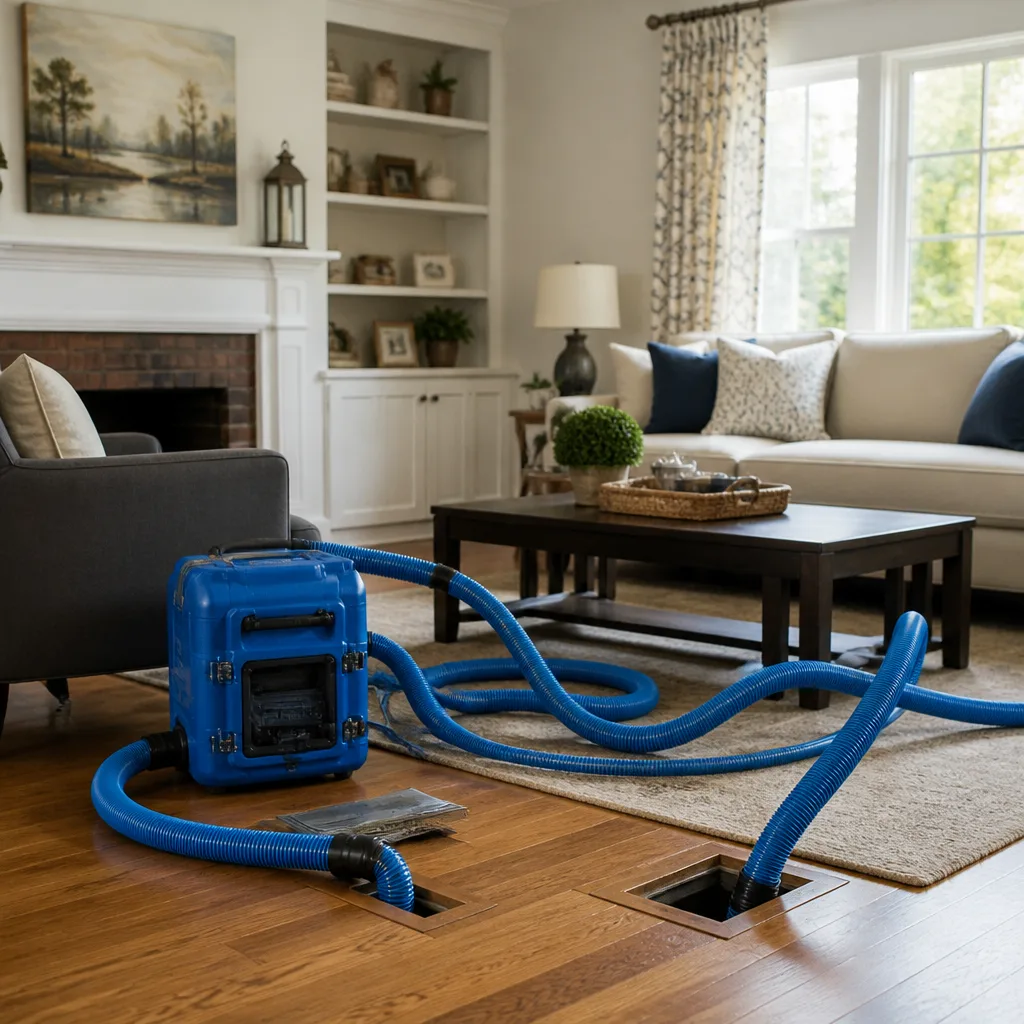 Whole-home duct cleaning
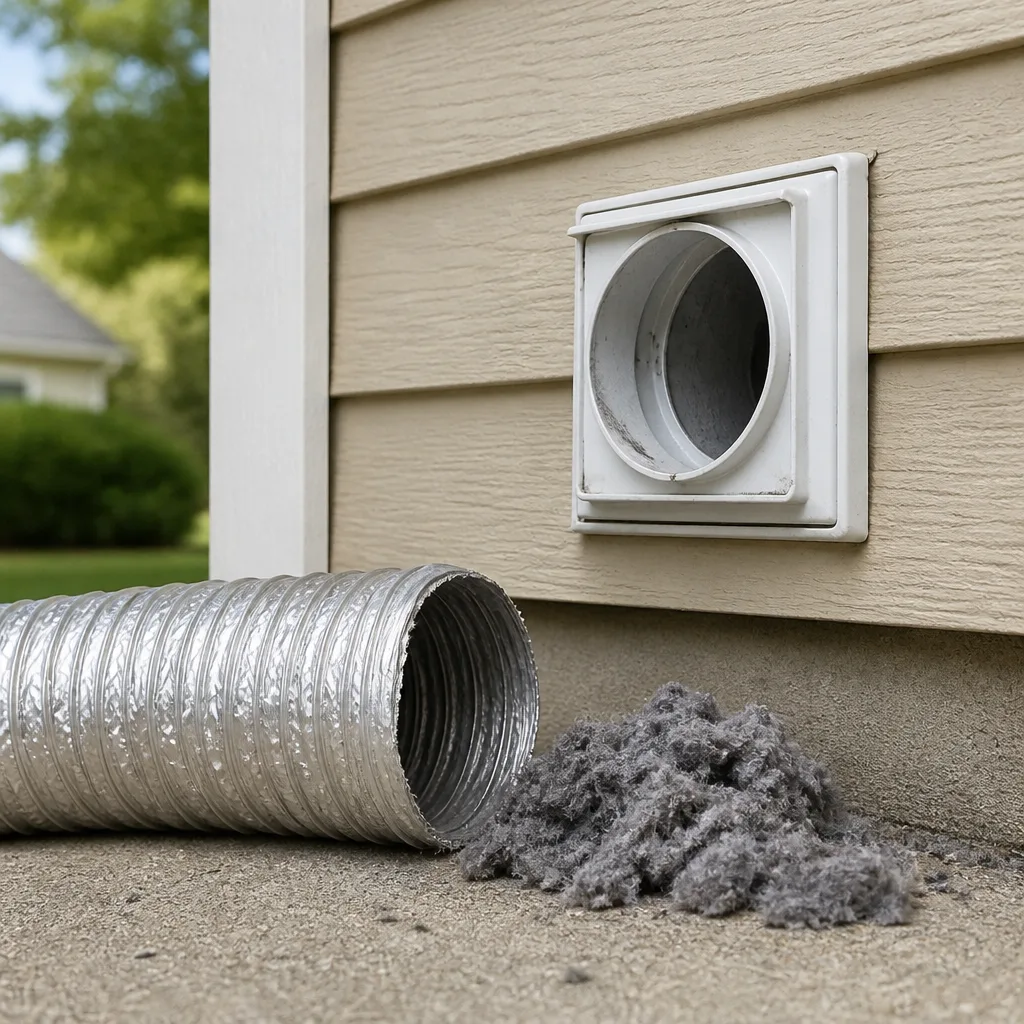 Dryer vent cleaning
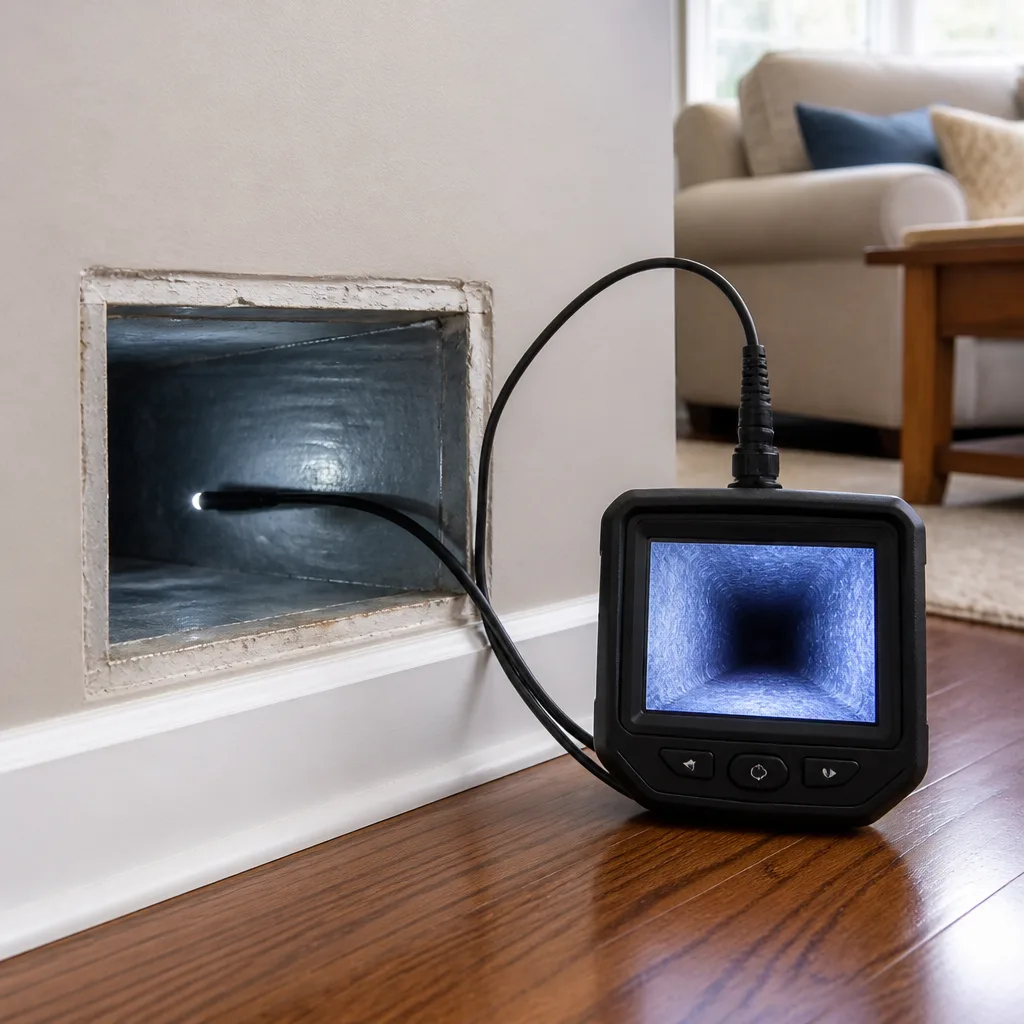 Camera inspection
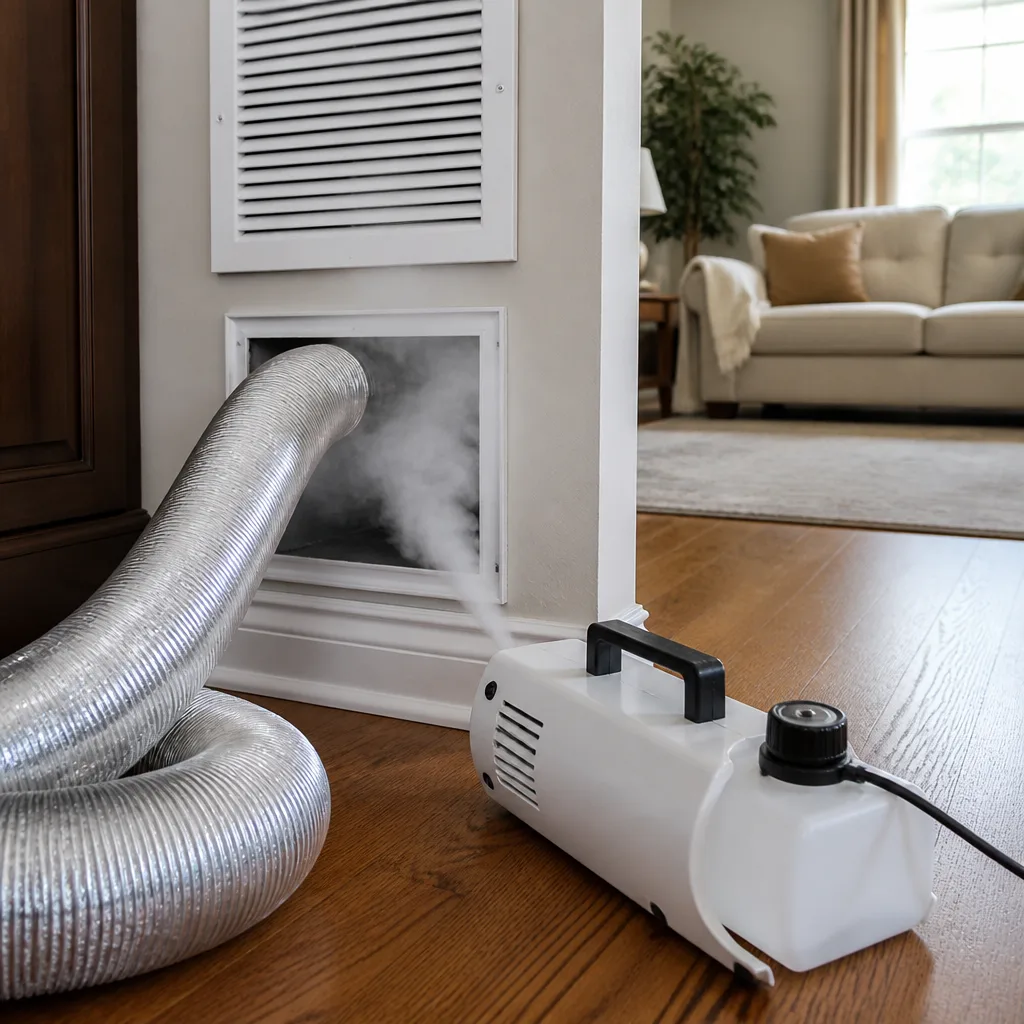 Sanitizing & deodorizing
Whole-system duct and dryer vent check with before-and-after photos - you see exactly what came out of your vents
That "$99 whole-house special" is a bait ad - the real number appears once they are in your hallway, or the "clean" is a shop-vac at the register. We photograph the inside of your ducts before and after instead.
How to Hire an Air Duct Cleaning Contractor in Clear Lake: A Step-by-Step Guide
Texas doesn’t require a specific license to offer air duct cleaning. That single fact explains most of what goes wrong in this trade. The coupon crew with a shop vac and the contractor running a truck-mounted negative-pressure system with HEPA filtration both show up in the same search results, use the same polished website templates, and quote prices that look comparable on the surface. What separates them shows up only when you know which questions to ask before anyone touches your ductwork.
This guide walks you through hiring for a Clear Lake home, from the first phone call to the final walkthrough. You’ll learn what equipment to ask about by name, how to read a quote that covers the whole system rather than the main trunk lines, what NADCA membership does and doesn’t guarantee, and the red flags that show up specifically in the Houston-area market. By the end, you’ll have a short list of questions that disqualify a contractor in under five minutes.
Quick Answer
To hire an air duct cleaning contractor in Clear Lake, verify three things before you book: the crew uses professional truck-mounted or purpose-built negative-pressure equipment with HEPA filtration (ask for the brand names), the quote covers every supply and return branch line rather than just the main trunk, and the company can document the work with before-and-after photos of your own ducts. Ask whether they carry NADCA membership, what their walk-through inspection includes, and whether they can repair and seal ductwork or only clean it. Go with the contractor who answers all of that without hesitation and puts one flat price per system in writing.
Styles & brands we work with
- Whole-home duct cleaning
- Dryer vent cleaning
- Camera inspection
- Sanitizing & deodorizing
Table of Contents
- Why Texas Has No Duct Cleaning License (And What That Means for You)
- The Equipment Questions That Disqualify a Contractor
- Does the Quote Cover the Whole System or Just the Trunk Lines?
- How to Verify NADCA Membership (And What It Doesn’t Cover)
- What a Legitimate Walk-Through Looks Like Before Any Price Is Quoted
- Houston-Area Red Flags: Storm Chasers, Low Flat Rates, and Mold Upsells
- Step-by-Step: Hiring a Contractor in Clear Lake
- Why Cleaning Alone Isn’t Enough: Repair and Sealing
Why Texas Has No Duct Cleaning License (And What That Means for You)
Air duct cleaning isn’t a licensed trade in Texas. The state licenses HVAC contractors for the installation and repair of heating and cooling systems, but the cleaning of ductwork itself doesn’t require a state-issued credential. Anyone with a vacuum, a van, and a business name can legally offer the service.
That gap has real consequences for Clear Lake homeowners. It means the burden of vetting falls on you, and it means the industry’s reputation problem is structural rather than accidental. When the barrier to entry is essentially zero, the field fills with contractors who cut corners because cutting corners is profitable and almost never enforced.
A few things follow from this:
- Price tells you almost nothing on its own. A very low quote often signals a smaller crew, consumer-grade equipment, or a “clean” that touches only the visible trunk lines.
- Credentials are voluntary. NADCA membership, equipment brand names, and documented procedures are the professional’s own investment in accountability. Ask for them directly.
- Insurance is still required by most reputable companies. Ask whether the crew working in your attic is insured and whether the company can show you a certificate.
- Written scope is your protection. Because no state inspector is checking the work afterward, the contract and the before-and-after documentation are the only real accountability you have.
None of this is a reason to skip duct cleaning. Clear Lake homes with older systems, recent renovations, or persistent dust problems genuinely benefit. It’s a reason to hire the way you’d hire an electrician: on evidence, not on price tag.
The Equipment Questions That Disqualify a Contractor
Ask what equipment the crew brings, and listen for three technical terms: negative pressure, HEPA filtration, and contact vacuuming. A contractor who can explain all three in plain language is a contractor who does the job properly. One who can’t is likely running a shop vac and a rotating brush, which stirs up more debris than it removes.
Negative pressure machines
A negative-pressure machine pulls the entire duct system into a vacuum state before cleaning begins, so loosened debris travels toward the machine instead of blowing into your living room. Ask which brand they use. Purpose-built systems like Rotobrush and Nikro are the industry standard for residential work, and the crews running them tend to speak about them specifically rather than generically.
HEPA filtration
HEPA filtration on the vacuum exhaust traps fine particles that would otherwise cycle back into your air. Ask whether the exhaust is HEPA-filtered. If the answer is “it’s a very strong vacuum,” that isn’t the same thing.
Contact vacuuming versus air-sweep
Contact vacuuming means the technician physically brushes the interior duct surfaces while vacuuming. Air-sweep alone, without contact, relies on airflow to move debris and misses the settled film that clings to duct walls. A thorough job combines both: mechanical agitation with contact vacuuming, pulling toward a negative-pressure source.
Answers that should end the conversation
- “We use a shop vac” or “a standard industrial vacuum.”
- “We blow it out with compressed air” with no mention of containment or filtration.
- Vagueness about brand names when you ask specifically.
- Unwillingness to tell you what happens to the debris once it leaves the duct.
Our technicians have up to 10 years of experience, and the equipment question is the one that separates contractors fastest. The answer to “what machines will you bring into my house” should take less than ten seconds and include actual names.
Does the Quote Cover the Whole System or Just the Trunk Lines?
Most low quotes cover the main trunk lines only. That’s a fraction of your system. The trunk is the wide central ductwork running through the attic or crawlspace. The branch lines are the smaller ducts feeding each register, and they’re where most of the settled dust sits because airflow drops as the air turns into each room.
Ask the contractor directly: does the quote include every supply and return branch line, or only the trunk? If the answer is “the main lines” or “the visible runs,” you’re getting a partial clean at a price that looks attractive until you need the rest done.
What a full-system quote should list
- Every supply register and its branch duct.
- Every return register and the return plenum.
- The air handler or furnace cabinet interior.
- The main trunk lines.
- Sanitizing or deodorizing, if included, with the product mentioned by name.
- Any repair or sealing work quoted separately and in writing.
A full-system clean isn’t the same line item as a register-face wipe-down. Ask the technician how many registers and returns they’re cleaning, then count your own. The numbers should match.
If you want a baseline for what proper air duct cleaning covers, start there. And if the answer to the first question is “we do the trunks and then price each vent separately,” walk away. Per-vent pricing is how a low coupon quote turns into a much larger invoice once the crew is already on site.
How to Verify NADCA Membership (And What It Doesn’t Cover)
NADCA, the National Air Duct Cleaners Association, publishes standards for how duct cleaning should be done, including the ACR standard for assessing and cleaning HVAC systems. Membership signals that a company has committed to those standards, and the association maintains a searchable directory of members.
Here’s how to check:
- Ask the contractor for their NADCA member number or company name as listed.
- Search the NADCA member directory online for that exact company name and Clear Lake location.
- Confirm the listing is current, not expired.
- Ask which NADCA standards they follow on residential jobs.
What NADCA membership doesn’t prove
- It isn’t a state license; Texas doesn’t issue one for this work.
- It doesn’t guarantee the crew sent to your home follows the standards on every job.
- It doesn’t cover the contractor’s insurance or bond status; ask separately.
- It doesn’t mean every technician is certified individually. Ask about crew training.
Treat NADCA membership as one strong signal among several, not a finish line. A member company that can’t explain its equipment or refuses to document the work still isn’t the right hire.
What a Legitimate Walk-Through Looks Like Before Any Price Is Quoted
A real assessment takes 20 to 40 minutes and happens before any dollar figure is spoken. The technician inspects your system, asks about your air quality concerns, and builds a scope. Anything faster than ten minutes is a sales visit, not an inspection.
What the technician should do
- Ask why you called: dust, allergies, a recent renovation, a system that hasn’t been serviced in years.
- Open register grilles and look inside with a flashlight or camera.
- Inspect the air handler, blower, and evaporator coil area.
- Check accessible ductwork for disconnections, crushed sections, or tape failing at the joints.
- Confirm the number of supply and return lines and match that against the quote.
- Explain what’s actually there and what the cleaning will and won’t fix.
- Put one flat price per system in writing before any work begins.
What raises questions
- No flashlight, no camera, no register opened.
- A price given before the technician looks at anything.
- Pressure to sign on the spot with a “today only” discount.
- A quote that doesn’t name registers, returns, and the air handler separately.
Clear Lake has a lot of homes with attic ductwork that’s been sitting through many humid summers. A walk-through should include a look at how the ducts are supported and whether the insulation sleeve is intact. If the technician never goes into the attic, they’re guessing.
Houston-Area Red Flags: Storm Chasers, Low Flat Rates, and Mold Upsells
The Houston market has specific patterns worth watching for. Some crews travel through after major storms or busy seasons and disappear just as fast. Others quote a very low flat rate that covers a partial job. Both are common enough in Clear Lake that knowing them in advance is worth the read.
Storm-chasing crews
After a hurricane or a major weather event, out-of-area crews sometimes show up offering duct cleaning and air quality work. Some are legitimate. Many aren’t, and their accountability ends when they leave the region. Ask how long the company has operated in the area and where its reviews come from. A legitimate operation will answer without defensiveness.
Unusually low flat-rate pricing
A very low flat rate usually means one of three things: the crew is skipping the branch lines, the equipment is consumer-grade, or the price is a teaser that grows once the technician is inside. Ask what the flat rate includes line by line. If the answer is vague, the price isn’t final.
Mold treatment upsells without documentation
A technician who tells you there’s mold in your ducts without showing you photos or a moisture reading is selling, not diagnosing. Legitimate sanitizing follows inspection. Ask to see what they’re seeing before you agree to any treatment. Products from companies like Abatement Technologies are formulated for professional remediation work; generic fogging solutions sold door-to-door aren’t the same thing.
Other red flags specific to this market
- Cash-only payment with no written invoice.
- No physical business address or verifiable local presence.
- Pressure to bundle duct cleaning with unrelated repairs on the same visit.
- Unwillingness to provide before-and-after photos of your actual ducts.
Step-by-Step: Hiring a Contractor in Clear Lake
Here’s a practical sequence that filters most problems out before you book anyone.
- Define the problem first. Write down why you’re considering duct cleaning: allergies, dust after a renovation, a musty smell, a system that hasn’t been serviced. This keeps the conversation on your actual situation instead of a sales script.
- Get three quotes from local companies. Ask each the same questions. The one that asks you questions back is worth extra attention.
- Ask the equipment question by name. Negative pressure machine brand, HEPA filtration, contact vacuuming. Vague answers are a signal.
- Confirm the scope in writing. Every supply and return, the air handler, and the main trunks. If per-vent pricing appears, ask why.
- Verify NADCA membership and insurance. Both are checkable in minutes.
- Ask about repair and sealing capability. A contractor who only cleans can’t fix a disconnected duct or a crushed run. If you want a company that can also handle duct repair and sealing, confirm that scope at the quote stage.
- Require before-and-after photos of your own ducts. Not stock photos. Yours.
- Read the written estimate carefully. One flat price per system, agreed before work starts. Anything else is a future disagreement.
If you’re also due for dryer vent cleaning or want the air handler and coil area cleaned as part of the same visit, ask about HVAC cleaning so the scope is quoted together rather than added on afterward.
Why Cleaning Alone Isn’t Enough: Repair and Sealing
Cleaning removes what’s in the ducts. It doesn’t stop new contamination from entering. A duct system with a disconnected joint in the attic, crushed flexible runs behind the drywall, or failing tape at the plenum connections will be dirty again faster than a sealed system.
That’s why the walk-through matters. A contractor who only cleans can tell you the ducts were dirty. A contractor who repairs and seals can tell you where the air loss is happening and fix it. In Clear Lake homes, the most common findings are flexible duct sections that have sagged or crushed over time, joints that were taped rather than sealed, and returns pulling air from attic space.
Questions to ask about repair and sealing
- Can you check for disconnected or crushed runs during the walk-through?
- Do you seal joints with mastic or approved tape, or only re-tape?
- Is repair quoted separately from cleaning? It should be.
- Can you show before-and-after photos of the repaired sections?
Whole-home air treatment systems from Honeywell and Aprilaire are a related piece of the picture. If you already have one, ask whether the contractor is authorized to service it. Not every duct cleaner is, and a cleaning visit is a good time to have the system checked by someone who knows the equipment.
Common Mistakes to Avoid
- Hiring on price alone. In a market with no licensing barrier, the lowest bid is often the one with the shortest scope. Ask what’s included before asking what it costs.
- Accepting a per-vent quote. Per-vent pricing is how a low teaser turns into a much larger final invoice. Ask for one flat price per system instead.
- Skipping the walk-through. A quote given over the phone without inspection is a guess. Insist on a visit that includes opening registers and looking at the air handler.
- Not asking about equipment. Consumer-grade vacuums and shop vacs don’t remove settled debris from duct walls. If the crew can’t name their machine, that’s a red flag.
- Buying mold treatment without documentation. Photos and moisture readings first, treatment second. Never the other way around.
- Forgetting the returns. Return ducts pull more dust than supplies. A quote that covers supplies only is incomplete.
- Not verifying NADCA membership. It takes two minutes online and tells you whether the company is accountable to published standards.
See the difference
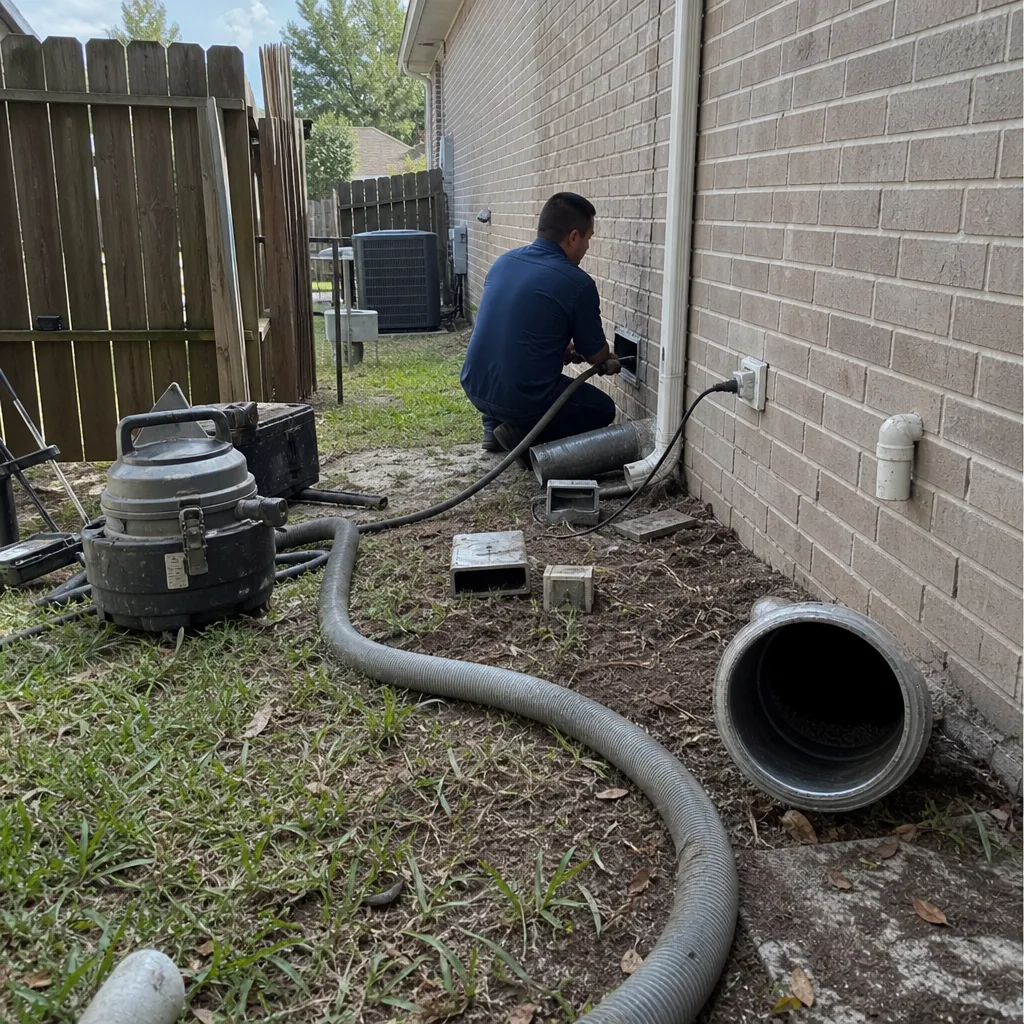 Before
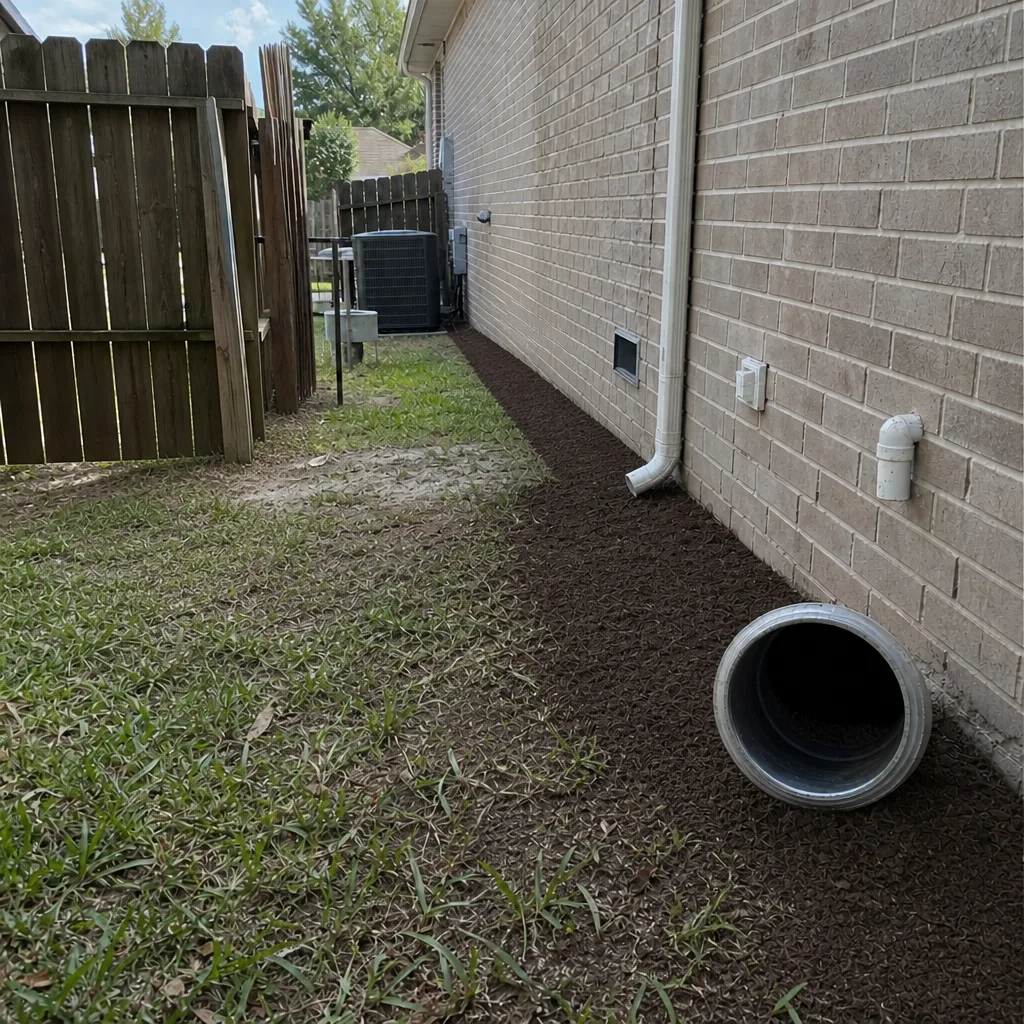 After
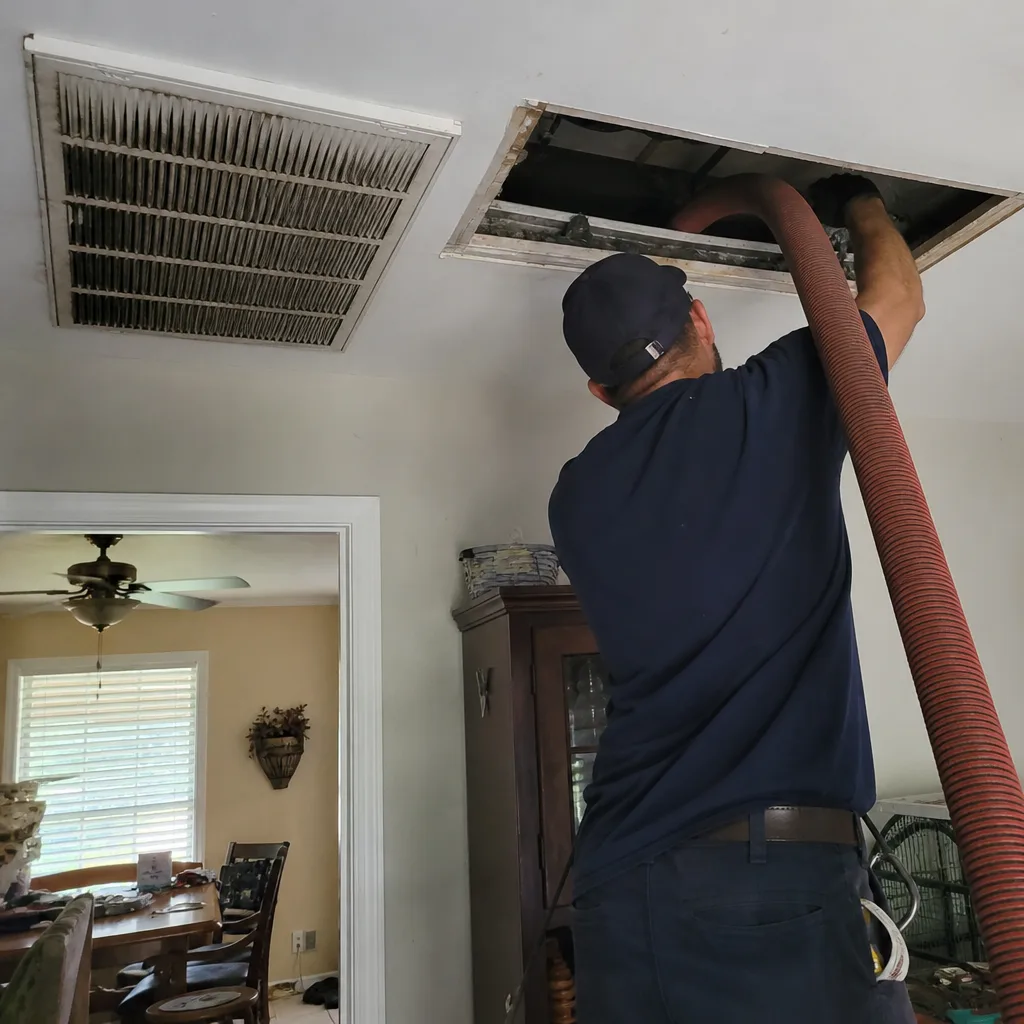 Before
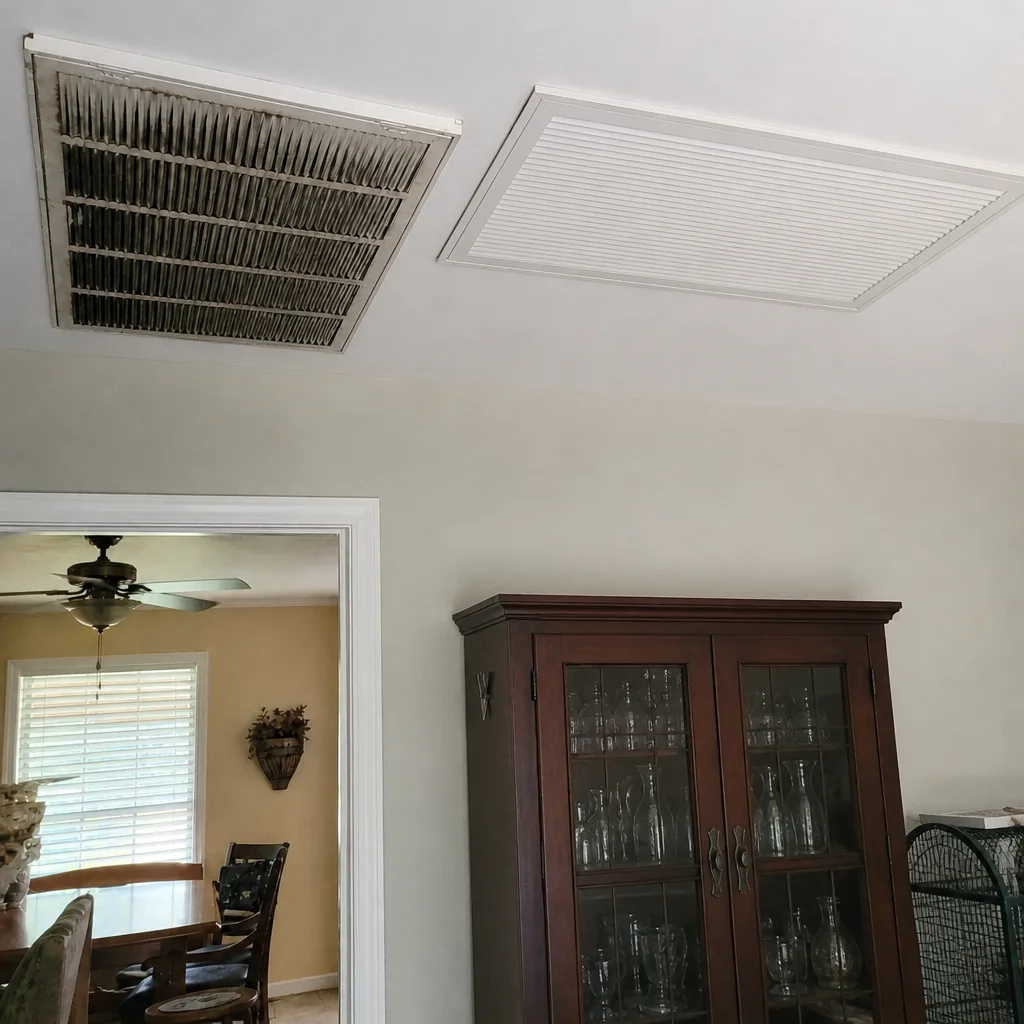 After
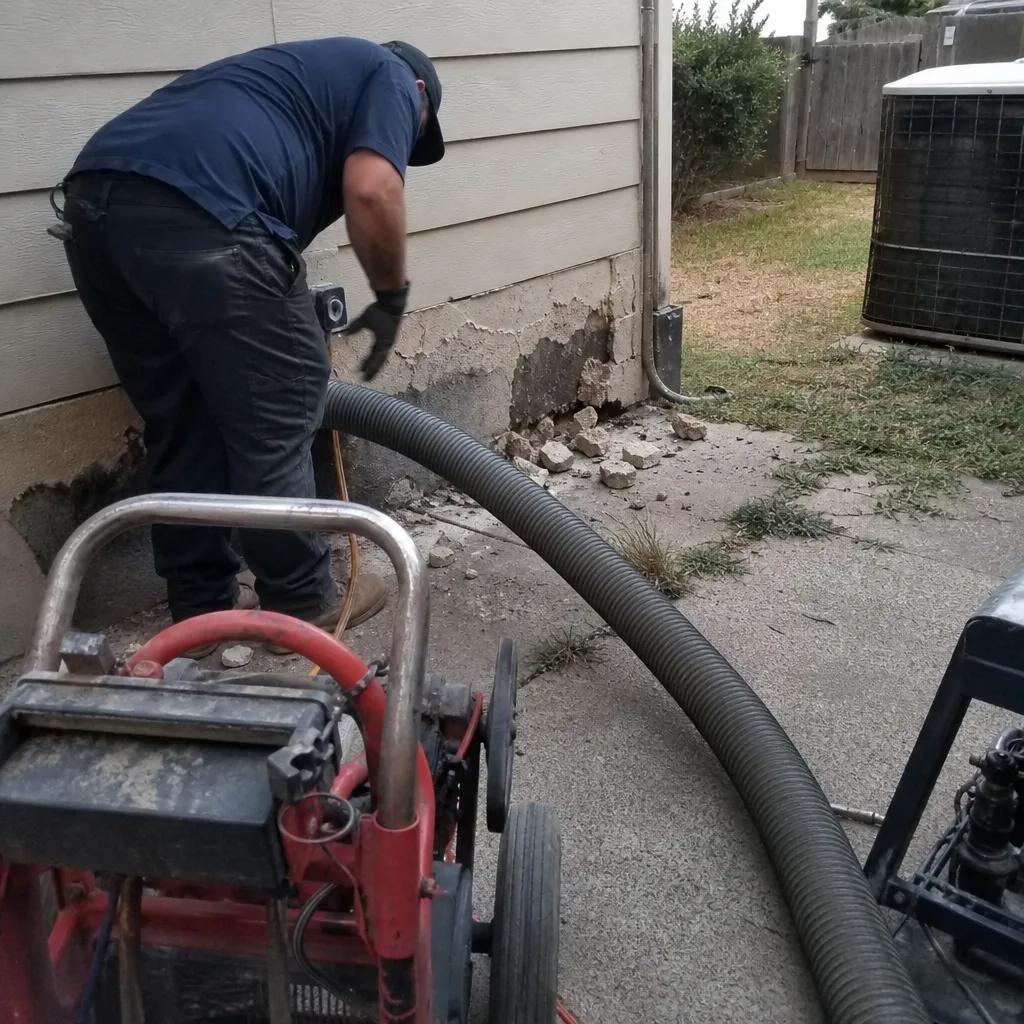 Before
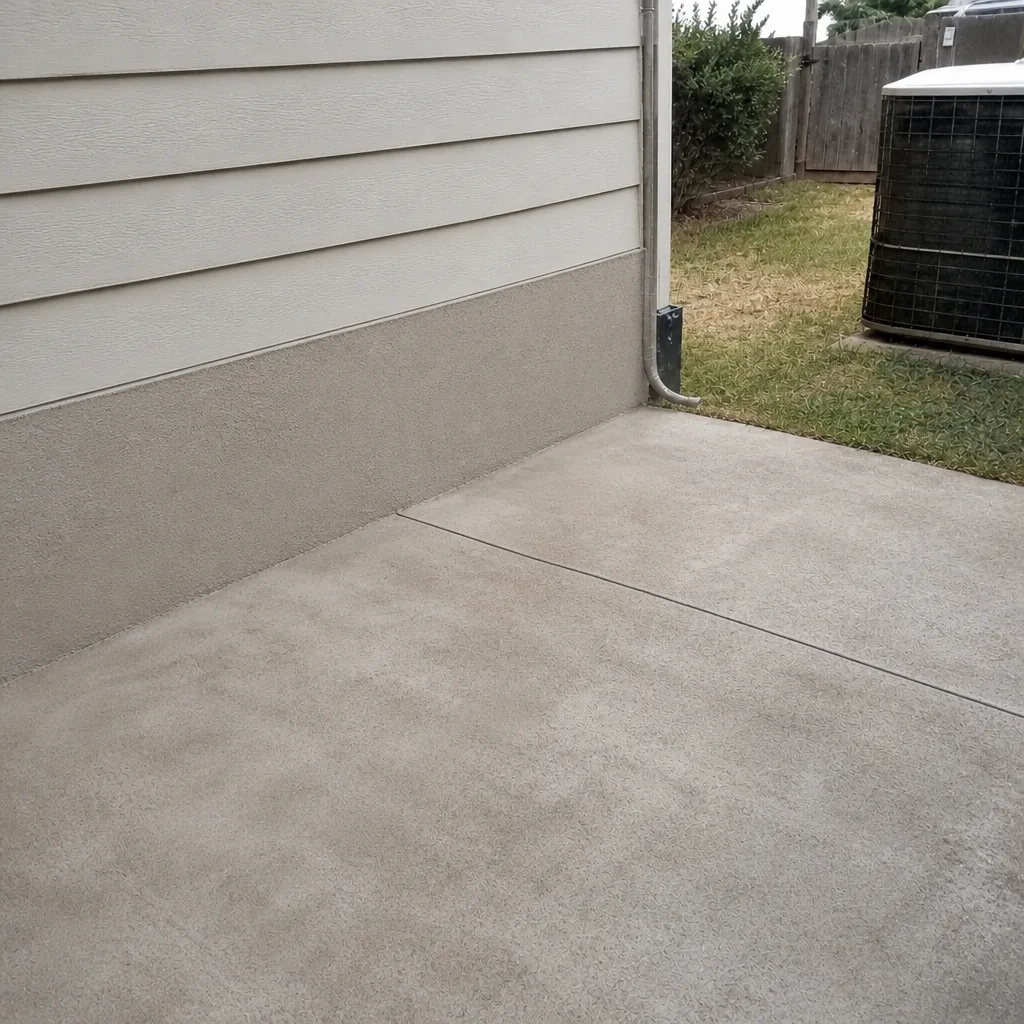 After
When to Call a Professional
Some signs point clearly to professional help rather than a weekend project. Visible dust blowing from registers right after you’ve cleaned the room. A musty smell that returns within days of deep cleaning. A recent renovation that filled the house with drywall dust. An older Clear Lake home where the ducts haven’t been serviced in years and the previous owners didn’t leave records. Allergy symptoms that improve when you leave the house. A dryer taking two cycles to dry a load.
None of these require a rushed decision, but they do deserve a proper look rather than another round of register wipes. Clear Lake Air Duct Cleaning offers free estimates in Clear Lake. Call (833) 513-8670. We answer 24/7. Fast dispatch from 7am to 7pm, Sunday through Friday.
We work alongside Clear Lake Air Duct Cleaning services that cover the full air system: cleaning, sanitizing, repair, and sealing in one scope. The local pro is licensed and insured as their state requires, and a written estimate sets the final price before any work begins.
Frequently Asked Questions
Air duct cleaning in Clear Lake typically runs a range based on the size of the system rather than a per-vent figure, and the written estimate sets the final price. Ask for one flat price per system that lists every supply and return, the air handler, and the main trunk lines. Call (833) 513-8670 for an exact quote; estimates are free.
Cheap quotes usually cover less: the main trunk lines only, consumer-grade equipment, or a teaser price that grows once the crew is on site. A very low flat rate is often a partial clean with an upsell built in. Ask what the price includes line by line before you book. Call (833) 513-8670 for a walk-through and a written scope.
Ask for before-and-after photos of your own ducts, not stock images, and a walkthrough of the air handler after the clean. A contractor unwilling to document their work is telling you something. We provide photos of your ducts, not a brochure. Call (833) 513-8670 to schedule an estimate.
Most homes do fine with cleaning every few years, but a recent renovation, pets, allergies, or a system that hasn’t been serviced in years all shorten that interval. There’s no universal rule. If dust returns quickly after cleaning, the problem may be unsealed duct joints rather than cleaning frequency. Call (833) 513-8670 to talk through your situation.
No. Texas doesn’t issue a specific license for air duct cleaning, which is why vetting falls on the homeowner. Ask about equipment brand names, NADCA membership, insurance, and written scope before booking anyone. If you want a contractor who can answer all of that, call (833) 513-8670.
Sometimes, but only if the source is in the ducts or the air handler. A musty smell can come from moisture in the coil area, a disconnected return pulling attic air, or microbial growth on duct surfaces. Legitimate sanitizing follows inspection with photos and moisture readings. Call (833) 513-8670 to schedule a walk-through.
The Bottom Line
Hiring a duct cleaner in Clear Lake comes down to three checks: verify the equipment by brand name, confirm the quote covers every supply and return rather than just the trunk lines, and require before-and-after photos of your own ducts. Texas doesn’t license this work, so your diligence is the only real standard in the room. Ask about NADCA membership, ask whether the contractor can repair and seal as well as clean, and watch for teaser pricing and mold upsells without documentation. One flat price per system, agreed before work starts, is the arrangement you want.
Clear Lake Air Duct Cleaning offers free estimates in Clear Lake. Call (833) 513-8670. We answer 24/7. Fast dispatch from 7am to 7pm, Sunday through Friday.
Written by the team at Clear Lake Air Duct Cleaning.