
Emergency Air Duct Cleaning Near Me: What Clear Lake Homeowners Should Do First
If smoke, mold, or an animal got into your ductwork, shut the system off at the thermostat before you do anything else. That one step stops the blower from pushing the problem into every room in the house. The first 30 minutes matter more than the cleaning itself, and what you do in them decides whether a bad day stays contained or turns into a full duct system job. Below is the triage checklist we walk Clear Lake homeowners through before anyone touches a vent. If you’d rather not reason it out alone, call (833) 513-8670.
Key Takeaways
- Turn the HVAC system off at the thermostat the moment you suspect contamination. Running the blower spreads it.
- Not every scary smell is a true emergency. Fire residue, sewage backup, animal intrusion, and confirmed mold are. A musty closet that turns out to be a damp towel is not.
- Photograph everything before anyone cleans anything. That’s your record of what was in the ducts and what a contractor is claiming to remove.
- Clear Lake’s humidity makes moisture problems inside ductwork move faster than in dry climates, so treat water intrusion as urgent even when the air smells fine.
- A legitimate assessment starts with camera inspection and a written scope. Anyone quoting a price sight-unseen is guessing.
True Duct Emergency vs. Urgent-but-Not-Emergency
A true duct emergency means something dangerous or biologically active is actively moving through your air system. Fire residue after a kitchen or electrical fire. A sewage backup that reached the ductwork. A dead animal or a live rodent problem in a return. Confirmed mold growth, meaning you or a professional actually saw it, not guessed from a smell.
The urgent-but-not-emergency category is bigger than most people expect. It covers a dusty house after a renovation, a system that hasn’t been serviced in years, a faint musty smell that only shows up when the heat kicks on, or visible dust streaks around the return grilles. Those jobs matter, and they’re worth doing properly, but nobody needs to pay a premium for rush framing to get them handled today.
Here’s the distinction that saves Clear Lake homeowners money: “emergency” has become a marketing word. Some companies will call anything an emergency if it gets them in the door faster. The real question isn’t how fast someone can arrive. It’s whether the problem is still spreading. If the system is off and the source is identified, you have time to get a proper inspection and a real scope of work. If contamination is reaching the living space through a running blower, that’s when speed actually counts.
What to Do in the First 30 Minutes
The order of operations matters. Work through these steps in sequence and you’ll protect both your indoor air and your leverage in any conversation with a contractor.
- Shut the system off. Thermostat to OFF, fan to AUTO. If there’s a fire or sewage source, kill power to the air handler at the breaker too, and follow whatever your fire department or water remediation team tells you first.
- Identify the contaminated zone. Which return pulled the problem in? Which rooms smell it most? Trace it back. A return in a hallway near a kitchen fire tells you where the smoke entered. That matters for containment.
- Block what you can. Close supply registers in unaffected rooms, tape over the contaminated return grille with painter’s tape, and keep pets and kids away from that area.
- Document with photos. Grilles, filter, duct openings, the source itself. Photos before anyone touches anything are your baseline. A reputable contractor will welcome them, because they make the assessment easier.
- Don’t run a box fan or portable air cleaner in the affected zone. Moving air around before containment spreads the problem.
- Call for an assessment, not a cleaning special. Ask what inspection equipment they use before you agree to anything.
We’ve seen homeowners skip step one and let the blower run for hours while they searched for a phone number. By the time anyone arrives, a one-room problem has become a whole-house cleaning.
Why Clear Lake’s Humidity Makes This Worse
Clear Lake sits in a climate where warm, humid air is normal for most of the year, and that changes how a moisture problem inside ductwork behaves. When a storm pushes water into a wall cavity, a ceiling, or an air handler closet, the moisture doesn’t stay put. It migrates into insulation and ductwork lining, and warm humid surroundings give mold the conditions it needs to get established quickly.
That means the window between “we had some water come in” and “there’s growth in the ducts” is shorter here than it would be in a dry part of the country. A homeowner in a drier climate can dry things out and wait a week to assess. In Clear Lake, waiting a week after a storm-related intrusion is a gamble. If water reached anywhere near the air handler, the plenum, or flex duct, treat it as urgent. Get the space dried, get the ductwork inspected, and don’t run the system on contaminated ductwork just to take the edge off the heat.
Humidity also makes the musty-smell question harder. A mildly musty smell in Clear Lake isn’t automatically a duct problem. It could be a damp closet, a slow leak under a sink, or a bathroom fan that vents nowhere useful. That’s why camera inspection before cleaning matters. We’d rather show you a clean duct interior than sell you a cleaning you don’t need.
Red Flags of Opportunistic Duct Companies
Storm season brings out companies that weren’t cleaning ducts last month and won’t be next month. Some of the worst outcomes we hear about start with a knock on the door or a flyer with an emergency special on it. Watch for these signals.
- A price before an inspection. Nobody can quote a duct cleaning honestly without seeing what’s in the ducts. A number given over the phone before any camera work is a guess at best.
- No camera, no scope. If the assessment is “yep, they’re dirty, we’ll clean them,” that’s not an assessment. Ask to see the camera footage of the interior.
- Pressure to decide today. Urgency is a sales technique when it’s aimed at your wallet rather than at a contamination that’s actively spreading.
- Equipment that looks like a shop vacuum. Professional duct work uses purpose-built systems designed for containment and agitation. A consumer vacuum attached to a register is not the same thing, and it can stir contamination loose without capturing it.
- No written scope. You should know exactly which zones will be cleaned, what product will be used to sanitize, and how containment will work before any equipment comes out of the vehicle.
- Vague answers about repair. If a duct section is crushed, disconnected, or torn, cleaning alone won’t fix it. A company that only cleans will clean around the damage and call it done.
One light way to test a company: ask what they’ll do if the camera shows the ducts are actually fine. A straight answer takes about two seconds. A long pause tells you what you need to know.
What a Legitimate Emergency Assessment Looks Like
A good assessment has three parts, and you should see all of them before you agree to any work.
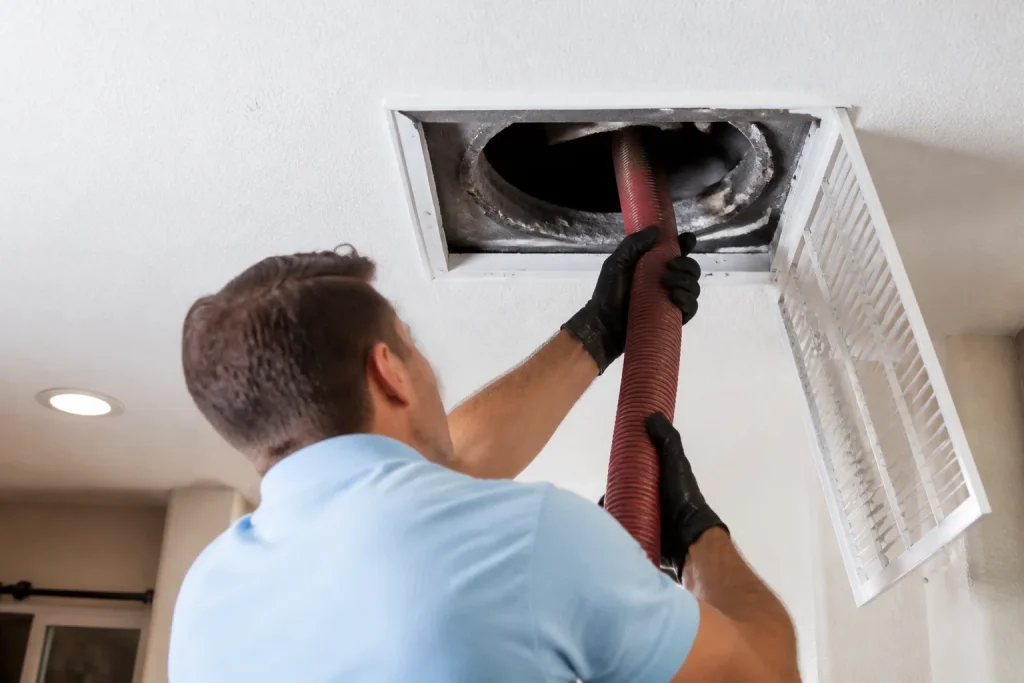
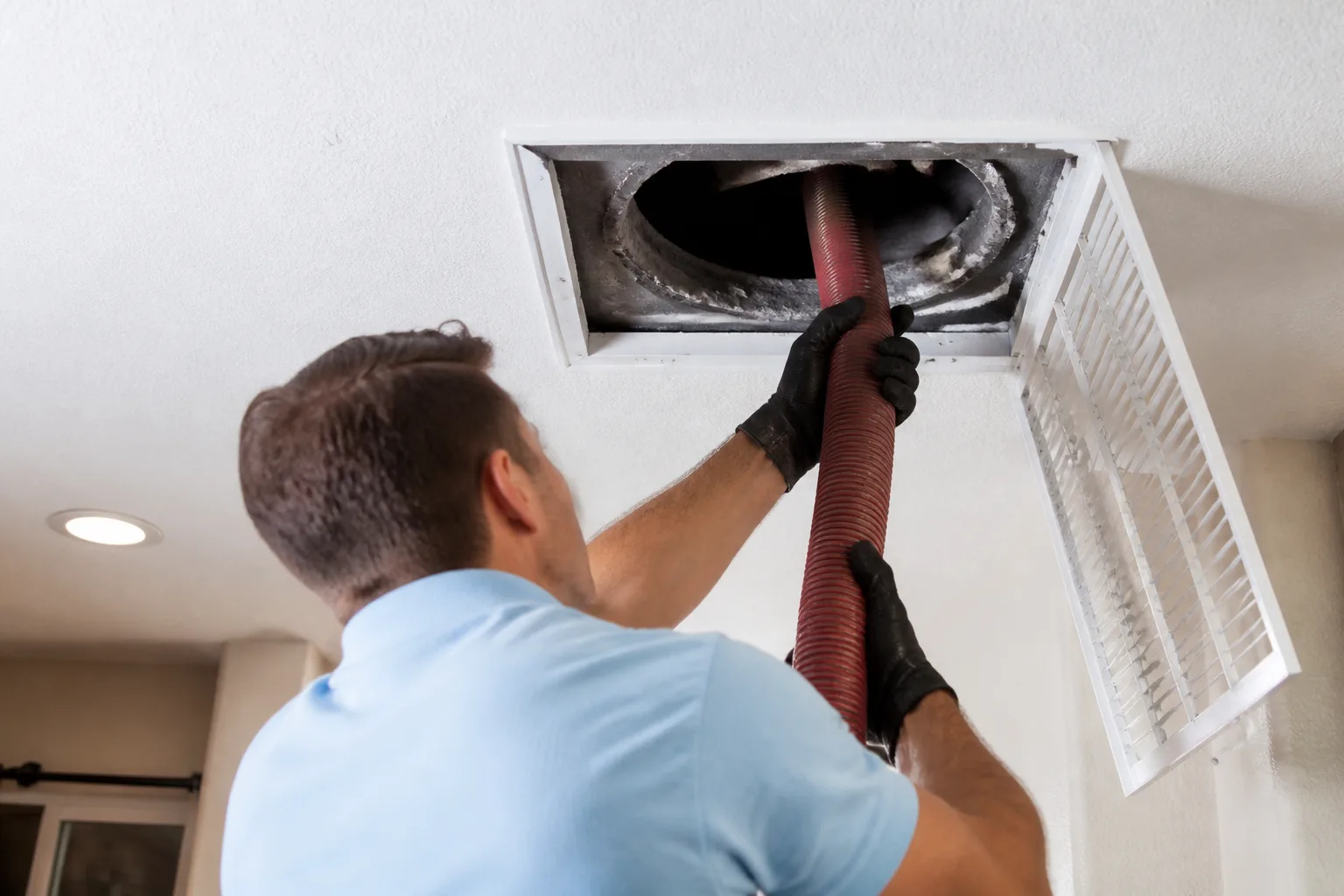
Camera inspection first. A technician should run a camera through the ductwork and show you the feed. That’s how you confirm the contaminant, its extent, and whether a duct section needs repair rather than cleaning. When we run the Rotobrush and Nikro systems, the inspection comes before any equipment runs, and the cleaning plan comes straight from what the camera shows.
A written scope of contamination. This is a document, not a conversation. It should name which zones are affected, what the contaminant is (soot, biological growth, animal waste, dust and debris), how much of the system it reaches, and which ducts will be cleaned, sanitized, or repaired. You should be able to read it a day later and understand exactly what you paid for.
An explanation of containment protocol. Contamination doesn’t get to escape into your living room while it’s being removed. Ask how the crew seals off the work area, what negative pressure equipment they use, and where the exhaust goes. Professional-grade equipment exists precisely for this. A company that can’t explain containment in plain language hasn’t done much of it.
Sanitizing comes after cleaning, never instead of it. We use Abatement Technologies products for this step because they’re what remediation professionals use, not retail-grade fogging solutions. Cleaning removes the contaminant. Sanitizing treats what’s left behind. Repair and sealing come last if any ductwork is compromised. Clean, sealed, and sanitized is the outcome you’re buying.
When to Call a Pro
If the source is a fire, sewage, a live animal, or confirmed mold, call a professional before you run the system again. This isn’t a job for a consumer vacuum and a ladder, and loose contamination that gets stirred up and re-circulated is worse than leaving it in place until the right equipment arrives. Call (833) 513-8670. We answer 24/7. Fast dispatch from 7am to 7pm, Sunday through Friday.
Related services in Clear Lake: If the assessment points to a full duct cleaning, more on how that works is here: air duct cleaning. If the contamination came in through drywall dust or construction debris, our HVAC cleaning covers the coil and air handler side. And if a dryer vent was the source of lint, heat, or a moisture problem, that’s separate: dryer vent cleaning. Learn more about the full scope by visiting Clear Lake Air Duct Cleaning.
The Bottom Line
Most duct emergencies get worse from inaction or from a panicked call to the wrong company. The fix is simple. Shut the system off, find the source, document it, and get a camera inspection before anyone quotes a price. In Clear Lake’s humidity, take water intrusion seriously even when the house smells fine, and treat the “emergency special” flyer with the suspicion it deserves.
Our technicians have up to 10 years of experience, and we work with professional Rotobrush and Nikro equipment alongside Abatement Technologies products and Honeywell and Aprilaire whole-home air treatment systems. One flat price per system, agreed in writing before work starts, with before-and-after photos of your ductwork so you can see what was actually removed.
If you’re in Clear Lake and need help, Clear Lake Air Duct Cleaning offers free estimates. Call (833) 513-8670. We answer 24/7. Fast dispatch from 7am to 7pm, Sunday through Friday.
Frequently Asked Questions
It’s priced per system job by written estimate, not per vent, and you should agree on the number before work starts. Ask for the estimate in writing with the scope attached so the price and the work match. Call (833) 513-8670 for an exact quote. Estimates are free.
Yes, if smoke reached the return air path. Fire residue on duct surfaces keeps circulating every time the blower runs, so it needs proper removal, not a cover-up fragrance. Keep the system off and get a camera inspection before any cleaning. Call (833) 513-8670 to schedule an assessment.
No. Running the blower is exactly how a localized contaminant spreads into every room in the house. Shut the thermostat off first, then get an inspection. Call (833) 513-8670 and we’ll walk you through the first steps over the phone.
Usually because they’re a teaser figure that gets rewritten once the technician is on site, or because the job doesn’t include containment, camera inspection, or sanitizing. Legitimate pricing reflects whole-system work with the right equipment. Ask what’s included and get it in writing. Call (833) 513-8670 for a free estimate and a straight scope.
Written by the team at Clear Lake Air Duct Cleaning.
Need Air Duct Cleaning Help?
Call Clear Lake Air Duct Cleaning - the local pro we connect you with is licensed and insured, here with fast help in Clear Lake.
(833) 513-8670